About this permit
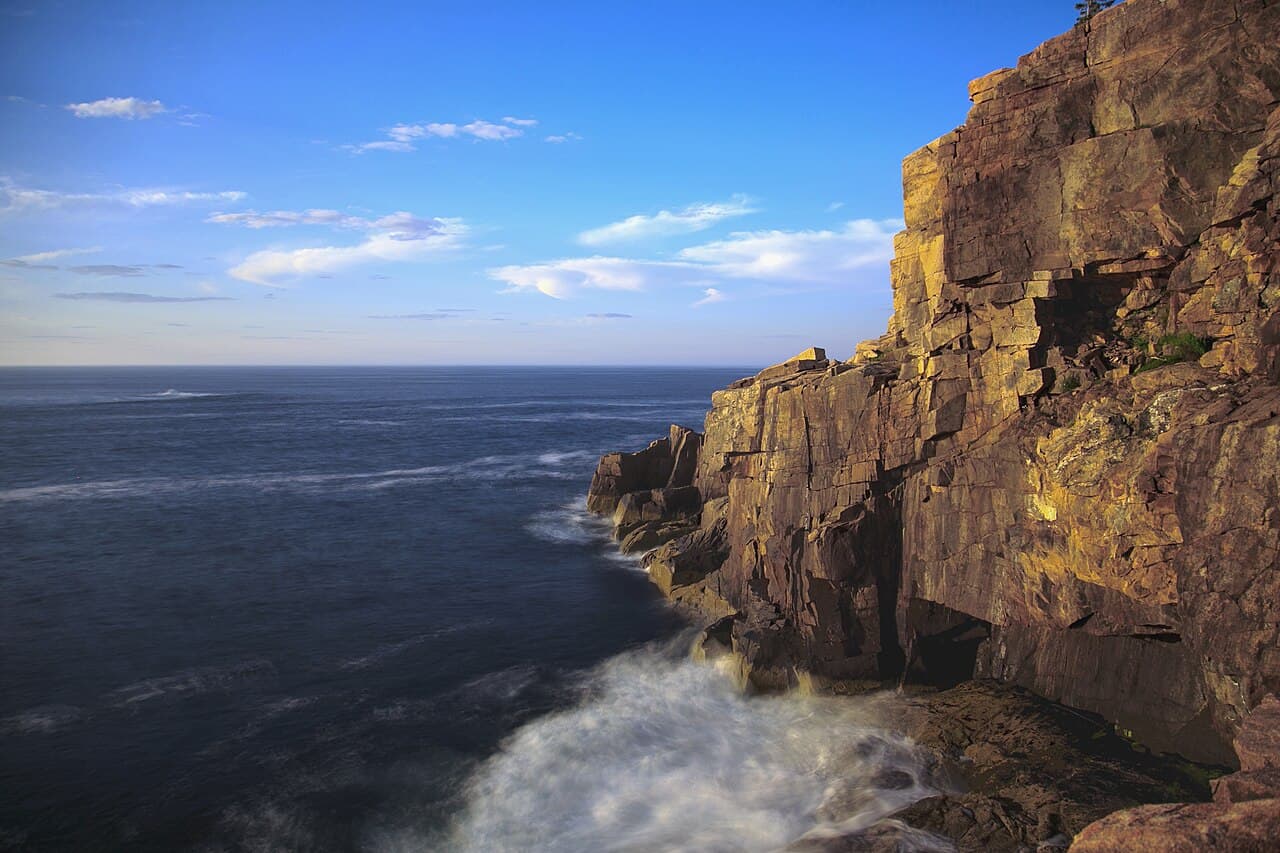
Otter Cliffs sits on the southeast shore of Mount Desert Island, just off the Park Loop Road in Acadia National Park. NPS describes it as "solid, course-grained pink granite allowing crack and face climbing, rappel access, and routes up to 5.12 (YDS)" rising straight out of the Atlantic.
The permit only applies to organized groups. Any six or more people sharing an affiliation (a club, a school, a business, a scout troop) climbing at Otter Cliffs on the same day need one, whether or not they stay together on the rock. Acadia issues two group permits per day for the season that runs from the Friday before Memorial Day through Labor Day, and caps any one organization at ten permits a season. Individuals and small unaffiliated parties need no permit at all.
The route
Access is from the parking area just past the Otter Cliff Road turnoff, roughly two miles beyond Sand Beach on the Park Loop Road. NPS asks every group to use "the one existing access trail off the Ocean Path" rather than spreading out through the vegetation on the headland.
From the top, most climbing is set up on fixed anchors the park maintains specifically so that people stop tying off trees. Routes run up to 5.12, with plenty of moderate crack and face lines below that, all of them short and all of them over water.
The permit is a day permit and the logbook at the top is part of it: NPS requires permit holders to "sign in and enter their Permit # in the Comments column of the Otter Cliffs logbook."
Why it matters
Otter Cliffs is the best-known climbing on the Maine coast and one of the few places in the eastern United States where you rappel in from the top of a cliff standing directly in the ocean. NPS describes granite "allowing crack and face climbing, rappel access, and routes up to 5.12 (YDS)." It is also small, which is the whole reason the permit exists: two organized groups on the same short stretch of rock is already a crowd.
The feeling
You walk in off the Ocean Path with the surf already loud, set anchors on the headland, and drop over an edge into salt spray. The rock is coarse and grippy, the exposure is straight down into moving water, and the whole climb is timed against a tide that is either giving you a base or taking it away. Nowhere inland feels like this.