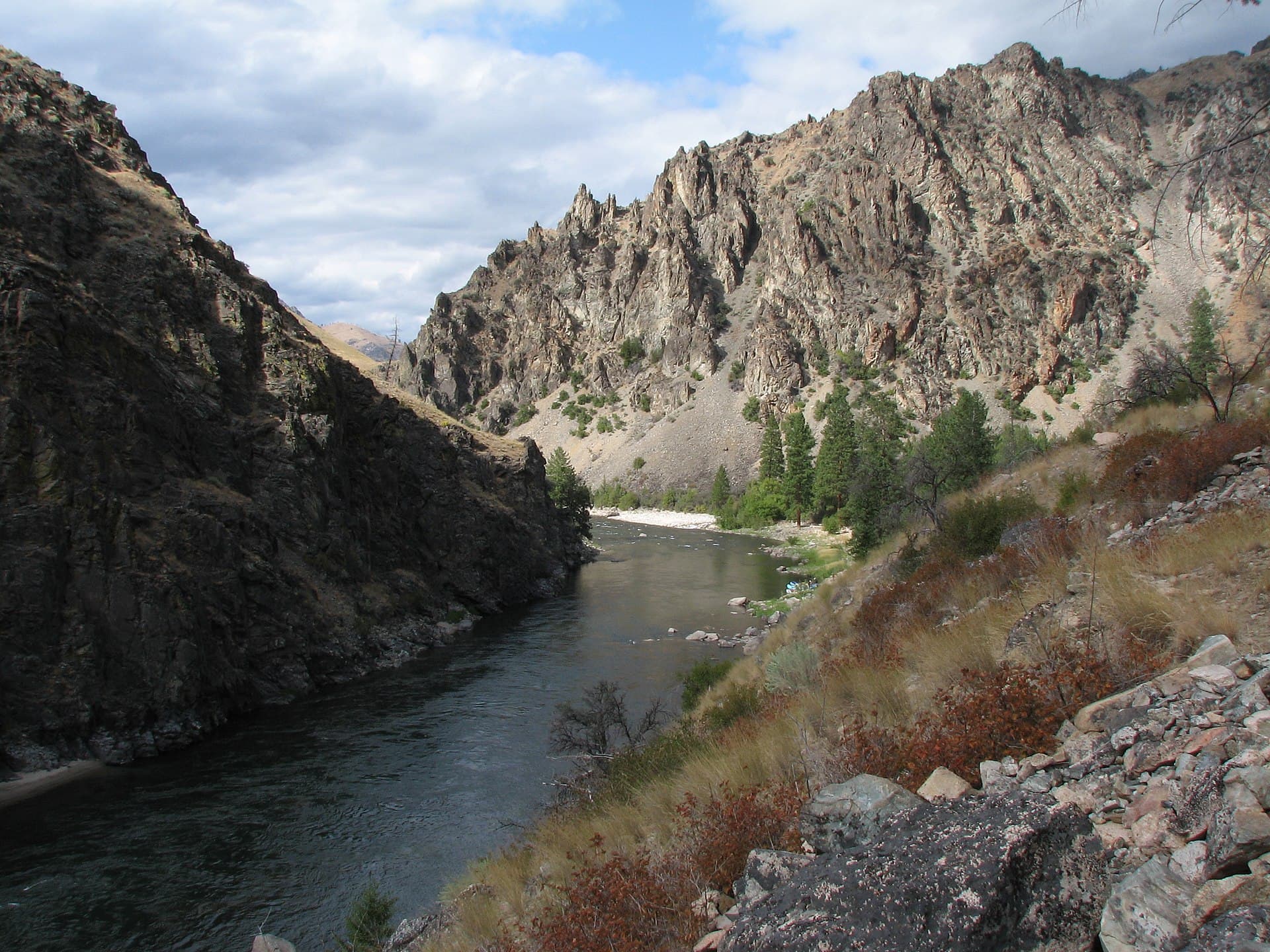
Launch
Camp Baker
River mile 0 of 58.9
The put-in, 26 miles from White Sulphur Springs. Day-use only, with no overnight camping except September 1 to November 30, and where the toilet inspection and safety talk happen.
Source: fwp.mt.gov
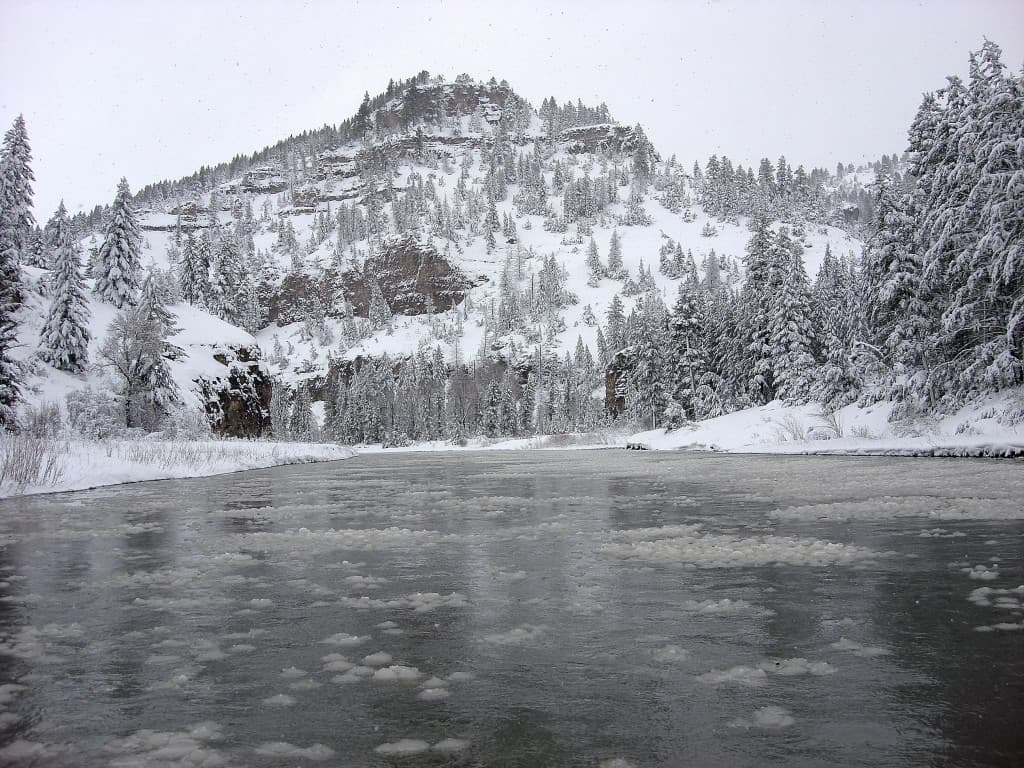
Montana's most sought-after wilderness float: 59 miles of limestone canyon from Camp Baker to Eden Bridge, drawn by state lottery.
“Float 59 miles of limestone canyon that you can only reach by boat, on one of 9 launches a day drawn by a Montana state lottery.”
Plan your Smith trip here, then enter the lottery.
Lottery permit
Smith is awarded by the agency's own lottery. Their page has this year's dates and how to apply.
Official permit pagePlanning another trip? See the permits we alert on.
Apply January 1 to February 15. Results, Feb 18.
Who issues Smith permits. Source: Montana Fish, Wildlife & Parks. Read the official permit page. “Application period opens: January 1, 2026 … Deadline: February 15, 2026 … Drawing: February 18, 2026”
As of September 2026, Smith in Montana Rivers, Montana requires a permit issued via lottery. Smith is one of the most competitive permits in the United States, rating 9/10 on PermitSnag's demand index. The Smith lottery opens January 1 and closes February 15, with results announced February 18. The permit season for Smith runs April 1 through August 15. The Smith route covers 59 miles, rated moderate.
Sign up at Montana Fish, Wildlife & Parks if you don't have an account. Verify your email and add payment info ahead of time.
Submit your application between January 1 and February 15. Apply for multiple dates to increase your odds.
Results are announced February 18. Check your email and your Montana Fish, Wildlife & Parks account.
More on Smith: Live availability activityWhen Smith permits open upSmith River (Montana) permit itineraryDo I need a Smith River permit?Smith lottery odds
~8.6%
Montana's Smith River permit lottery drew 11,571 applicants for 995 float permits in the 2026 drawing, about an 8.6% overall success rate. The most popular launch date, June 15, ran far longer odds at 1.87%.
Source: Montana Fish, Wildlife & Parks — Smith River · The Outdoor Wire — Smith River drawing odds statistics.
Smith permit fee: Float fees per person: $25 resident, $60 non-resident (13+); $15 ages 6-12; free under 6.
Camp Baker is river mile 0 and Eden Bridge is mile 58.9. Layover nights are allowed from Two Creek to Upper Parker Flat.
Camp Baker
River mile 0 of 58.9
The put-in, 26 miles from White Sulphur Springs. Day-use only, with no overnight camping except September 1 to November 30, and where the toilet inspection and safety talk happen.
Source: fwp.mt.gov
Gold pin: layover nights allowed.
Float 59 miles of limestone canyon that you can only reach by boat, on one of 9 launches a day drawn by a Montana state lottery.
The Smith River runs 59 miles from Camp Baker to Eden Bridge through a limestone canyon in central Montana, and it is the only river in the state that requires a permit to float. Montana Fish, Wildlife & Parks manages it with the Helena-Lewis and Clark National Forest.
Permits come from an annual drawing. Applications open January 1 and close February 15, with the drawing on February 18. Montana FWP publishes the results in a public statistics report, and here are the 2026 numbers: against a quota of 1,115 launches, 8,711 resident and 2,860 non-resident applicants named a first-choice date, and 995 permits were awarded (884 to residents and 111 to non-residents), leaving 120 launch days unclaimed in the drawing.
There is a second way in. The Super Permit lets its winner launch on any date they choose that year. Chances are $5 each with no limit on how many you buy, applications run January 1 through March 15, and the drawing is March 16.
The put-in is Camp Baker, 26 miles from White Sulphur Springs: State Secondary Road 360, the Fort Logan Road, runs west 16.6 miles to the Camp Baker turn-off. Camp Baker is day-use only, so there is no camping there the night before.
Registration happens by phone two days ahead of your launch. That is when you pick your boat camps, pay your float fees, and get an assigned one-hour window for the boat ramp. On launch day you collect your registration form, boat tags, river maps and floater log, sit through a mandatory safety and orientation talk, and show the ranger your portable toilet for inspection.
From there it is 59 miles to Eden Bridge, which most groups take four days to cover. The minimum is two nights and three full days. The river is a rainbow and brown trout fishery with whitefish throughout. Between May 15 and July 15 you are capped at four nights on the river, and only one of them can be a layover, taken at a mid-canyon camp between Two Creek and Upper Parker. Two SCAT machines at the Eden Bridge take-out handle the portable toilets at the end.
The Smith is the only river in Montana that requires a permit to float, and the reason is simple arithmetic: of the 118 miles of shoreline along the river, only 26 miles are public land. There are 27 boat camps with 52 campsites, you camp only in the one assigned to you, and once you launch at Camp Baker there is no road out until Eden Bridge.
The canyon closes in within the first few miles and then simply stays closed. Limestone walls, a trout rising in the slack water, and no traffic noise for four days. You know exactly where you are sleeping every night because a ranger assigned it to you over the phone two days ago, which sounds bureaucratic right up until you realize it means nobody is racing you downstream for a campsite.
Best for: Anyone comfortable with multi-day camping from a boat. The floating itself is well within reach of a first-time river camper.
Recommended experience: Basic boat handling and camp skills. The permit conditions, food storage and toilet requirements matter more here than paddling ability.
Not recommended for: Groups who want whitewater, and anyone unwilling to carry and use a portable toilet for four days.
Trailhead information
The only launch for the 59-mile float. Day-use only, with no overnight camping.
Arrive at least one hour before your assigned one-hour boat ramp launch time. Do not occupy the ramp before your window.
White Sulphur Springs to Camp Baker is 26 miles: take State Secondary Road 360 (Fort Logan Road) west from White Sulphur Springs 16.6 miles to the Camp Baker turn-off. Great Falls to Camp Baker via White Sulphur Springs is 127 miles.
White Sulphur Springs has lodging, gas, water and information, and sells fishing licenses. Top off your gas tank there. Camp Baker has nothing.
Trailhead information
The end of the float, 59 miles downstream.
Eden Bridge is 28 miles from Great Falls via Ulm and Interstate 15.
Great Falls, Cascade and Ulm are the closest services. Two SCAT machines at the take-out clean and sanitize approved portable toilets.
May and June carry the most reliable water and the most demand. The 2026 drawing statistics show mid-May dates drawing well over 200 first-choice applicants against 7 or 8 private launches. April launches are the quietest, with all 9 daily permits going to private groups and no outfitter allocation, at the cost of colder weather. Late summer flows can get thin.
April launches are cold with variable flows; by mid-May the water is usually at its best and demand peaks with it.
Crowd level · moderate
Warm and settled through June and early July, then flows drop off through August.
Crowd level · high
The drawn permit season ends in mid-August, so autumn floating falls outside the main drawing.
Crowd level · low
Not a practical float. Cold, low water and no realistic access.
Crowd level · low
The canyon is narrow enough that direct light only lands on the water for a few hours. First and last light on the upper limestone walls is the shot, taken from the boat or from camp.
Overcast days are better here than bright ones: the walls are pale limestone and they blow out easily in full sun.
The permit is the crowd control: a maximum of 9 launches a day and assigned camps mean you rarely share. April launches are the quietest, with all 9 daily permits going to private groups and no outfitters.
Emergency contacts, ranger station locations, and satellite communicator tips for Smith.
Bear canister requirements, approved container lists, and rental locations for this permit.
Gear Checklist: Required and recommended gear for Smith · Shuttle Services: Trailhead transportation options · Guide Services: Experienced wilderness guides
Some links may be affiliate links. Purchases support PermitSnag at no extra cost to you.
The 2026 application period opened January 1, the deadline was February 15, and the drawing was held February 18. The separate Super Permit drawing runs January 1 through March 15 with the drawing on March 16.
Montana FWP's 2026 Drawing Statistics Report shows a quota of 1,115 launches. 8,711 resident applicants and 2,860 non-resident applicants named a first-choice date, and 995 permits were awarded (884 to residents and 111 to non-residents), leaving 120 launch days unclaimed in the drawing.
Nine permits per day. Through April all nine go to private groups. From May onward outfitters take one or two of the nine, leaving seven or eight for private floaters.
Float fees are charged per person and apply year-round: free for children under 6, $15 for ages 6 through 12, $25 for Montana residents aged 13 and above, and $60 for non-residents aged 13 and above. Fees are paid at registration and are due on the launch date.
No. Only 26 of the river's 118 miles of shoreline are public land. There are 27 boat camps with 52 campsites, and you may only camp at the boat camps assigned to your permit.
Fifty-nine miles from Camp Baker to Eden Bridge, which floaters take four days to cover on average. The minimum is two nights and three full days. Between May 15 and July 15 you are capped at four nights.
A separate drawing whose winner may launch on any date of their choosing for that year. Chances cost $5 each and there is no limit on how many you can buy. Float fees are not included and are still due on the launch date.
No active conditions reported
Sign in to report trail conditions.
A separate drawing whose single winner may launch on any date they choose that year. Chances are $5 each with no purchase limit; applications run January 1 through March 15 and the drawing is March 16.
Long odds on a single permit, but you can buy as many chances as you like and it sidesteps the date-by-date competition entirely. Float fees are still due at launch.
A wilderness multi-day float in Idaho with assigned camps and a December-January lottery.
Far more demanding whitewater and a longer trip, but the same permitted, camp-assigned, no-road-out structure.
August dates draw a fraction of the applications that mid-May dates do. The 2026 statistics show several August launches with more permits available than applicants.
Lower and slower water, but in 2026 a number of August dates went unclaimed in the drawing entirely.
Build your full itinerary start to finish
Add your dates and get a day-by-day plan: what needs a permit, what gear to bring, and one link to share with your whole group to coordinate every step.
No permit needed to start
Two ways to land it
We check Smith for cancellations 24/7 and alert you when a spot opens so you can book before it's gone.
Set a free cancellation alertApply with a crew. Each person multiplies your combined odds. We coordinate invites, deadlines, and outcomes.
See plans to start a poolMost crews do both: get alerts for cancellations, and pool for the lottery.
Better odds with a crew
Smith permits are drawn by lottery. Every friend who applies adds another entry, so a crew gets more shots at the same permit than any one of you alone.
One of you runs the pool (Pro or a $19 alert). Everyone else joins free.
Auto win-detection tells you the moment your Smith application wins, so you never have to check Montana Fish, Wildlife & Parks. It reads the result email you forward us, so it takes a one-time setup in your inbox (about two minutes, and we walk you through it). Auto win-detection is on Pro or a $19 permit alert.
Turn on auto win-detectionOpens the official lottery. You submit your entry. We never automate or store your Montana Fish, Wildlife & Parks login.
Google lets you pick the sites it highlights for you. Add PermitSnag and our permit pages get marked as one of yours in AI Overviews and AI Mode.
Takes less than a minute.