Skip to content
Mount Rainier Wilderness Permit permit area in Mount Rainier National Park - backcountry hiking destination
Cancellations all season · lottery when it opens

Mount Rainier Wilderness Permit

Mount Rainier National Park · Washington

Overnight backcountry and climbing permit for Mount Rainier National Park. Cancellations return to Recreation.gov through the season, after an early-access lottery in winter and the public on-sale in spring.

Get an alert when a spot opens in your Rainier Wilderness zone.

Pick the zone you need

Rainier Wilderness sells by zone. Pick the one you need and we'll scan just that zone for openings, so you don't hear about areas you can't use.

Party

This permit allows up to 5 people per group.

When it opens

Every day
We alert you the moment a cancellation opens.You book it on Recreation.gov.
1 day
First come, first served from one day before your entry dateYou book on Recreation.gov.

Source: recreation.gov

70% of the openings our scanner caught on Rainier Wilderness were gone within 10 minutes.

Rainier Wilderness dates: cancellations and the lottery

We alert you to cancellations. The lottery runs February 10 to March 3.

  • Cancellations
    We alert you the moment one opens.
  • Lottery
    Feb 10–Mar 3
  • Quota season
    Jun 1–Sep 30

Who issues Rainier Wilderness permits. Source: National Park Service: Mount Rainier National Park. Read the official permit page. “February 10, 2026: Early-access lottery applications accepted starting at 7:00 am PT.”

max group size
5people

How to get a Rainier Wilderness permit

As of September 2026, Rainier Wilderness in Mount Rainier National Park, Washington requires a permit issued via lottery. Rainier Wilderness is a high-demand permit, rating 8/10 on PermitSnag's demand index. Cancelled Rainier Wilderness permits are re-released on the booking system, and PermitSnag alerts you the moment one opens. The Rainier Wilderness lottery opens February 10, 2026, 7:00 am PT and closes March 3, 2026, 7:00 pm PT, with results announced March 14, 2026. Awarded applicants book from March 21; general on-sale April 25 at 7:00 am PT.

Type
Overnight
Location
Cascade Range, WA
  1. Step 1: Check for cancellations

    Permits get cancelled daily. Peak cancellation times are 24-48 hours before the trip date.

  2. Step 2: Set up PermitSnag alerts

    Get notified when cancellations happen. Pro and $19 single-permit alerts are checked about every minute, 24/7; free accounts are checked hourly.

  3. Step 3: Create a Recreation.gov account

    Sign up at Recreation.gov if you don't have an account. Verify your email and add payment info ahead of time.

  4. Step 4: Apply during the lottery window

    Submit your application between February 10, 2026, 7:00 am PT and March 3, 2026, 7:00 pm PT. Apply for multiple dates to increase your odds.

  5. Step 5: Wait for lottery results

    Results are announced March 14, 2026. Awarded applicants book from March 21; general on-sale April 25 at 7:00 am PT. Check your email and your Recreation.gov account.

Rainier Wilderness pro tips

  1. Set a cancellation alert for your camps. The early-access winners book first and general on-sale in late April picks over what they left, so cancellations are where the good nights come back. Enter the February lottery too.
  2. Your reservation is not your permit. Collect it in person the day before or the morning of, and be there by noon on your start date or it gets cancelled and reissued.
  3. Count your party carefully against the five-person limit. Six people is a group at Rainier, and group sites exist at only 25 camps.
  4. For 2026, plan the Sunrise and White River side out of your itinerary. Those roads are closed until further notice for the Grand Park 2 Fire, which also takes the White River permit office offline.
  5. Carry a stove that burns bottled or liquid fuel. The parkwide fire ban has run since June 26, 2026, and twig-burning stoves were already prohibited before it.

More on Rainier Wilderness: Live availability activityWhen Rainier Wilderness permits open upMount Rainier Wilderness lottery datesDo I need a Mount Rainier Wilderness permit?Estimate your lottery oddsBoost your odds with a pool

How much a Rainier Wilderness permit costs

Rainier Wilderness permit fee: $6 Recreation.gov reservation fee plus $12 per person per night. Youth 15 and under are free.

The Rainier Wilderness hike

Route Type
Varies

Rainier Wilderness landmarks

  1. 1Devil's Dream Camp

    7 individual sites and 1 group site, 5.8 miles from Longmire.

  2. 2Klapatche Park Camp

    4 individual sites and no group site, so a party of six cannot camp here.

  3. 3Golden Lakes Camp

    5 individual sites and 1 group site on the quiet west side.

  4. 4Mowich Lake

    34.3 miles clockwise from Longmire. Currently unreachable by road: there is no public access from SR 165.

  5. 5Ipsut Creek

    12 individual sites and 1 group site, and the lowest camp on the circuit. Reachable only on foot from inside the park.

  6. 6Mystic Camp

    7 individual sites and 1 group site above the Carbon Glacier.

  7. 7Sunrise Walk-In Camp

    8 individual sites and 2 group sites, the highest camp on the trail. Sunrise Road is closed for the Grand Park 2 Fire.

  8. 8Summerland Camp

    5 individual sites and 1 group site, 7.0 miles and 2,300 feet above White River Campground.

  9. 9Indian Bar

    4 individual sites and 1 group site in the Ohanapecosh headwaters, 4.7 miles beyond Summerland.

One permit covers every night you spend in Mount Rainier's wilderness: 5 people to a trailside site, 12 if you are on snow in an alpine zone, and a fire that is banned parkwide right now.

About this permit

Mount Rainier sells its overnight wilderness through one Recreation.gov product, and a permit is required year-round for every overnight stay in the backcountry. A separate climbing permit is required for travel above 10,000 feet or on glaciers. The reservation is not the permit: the park's rule is that permits must be obtained in person at a wilderness information center or visitor center, and a reservation not claimed by noon on your start date is cancelled.

Cancellations return to Recreation.gov through the season, and a cancellation alert catches them. For the 2026 season the early-access lottery took applications from February 10 at 7:00 am PT to March 3 at 7:00 pm PT, notified applicants on March 14, and opened awarded booking windows from March 21. General on-sale was April 25 at 7:00 am PT. October 12 is the last date campsites can be reserved; on October 13 the wilderness information centers close, self-registration becomes available at some locations, and permits go first-come, first-served at the Longmire Museum.

Costs are $6 to Recreation.gov plus $12 per person per night, for up to 13 consecutive nights, and youth 15 and under are free. The park says about two thirds of summer season backpacking and climbing permits are made available for advance reservation, with the remaining one third issued at wilderness information centers first-come, first-served no more than one day before the trip start.

Two current conditions change how you plan a 2026 trip. A parkwide fire ban has been in effect since June 26, 2026 until lifted: no campfires, no wood, briquettes or any fuel in fire pits, fire pans or grills, though portable stoves and lanterns burning liquefied or bottled fuel are still allowed. And the Grand Park 2 Fire has Sunrise Road and White River Road to SR 410 closed until further notice as of the park's August 7, 2026 update, which takes the White River Wilderness Information Center off the map. The Longmire and Paradise wilderness information centers are both still reachable and both issue permits.

The route

The park's own three-part structure is worth understanding before you book. Designated trailside camps are metered by the number of parties, and each has one to eight improved sites that hold a party of one to five, roughly three small two-person tents. Many also carry a group site for parties of 6 to 12; the park says those exist at 25 designated camps. Cross-country zones are metered by parties in administrative sub-zones, need a camp at least a quarter-mile from any road or trail and 100 feet from water, and are closed to anyone hiking the complete Wonderland Trail. Alpine zones, where the park says generally only climbing activity occurs, allow camping only on permanent snow or ice or on bare ground previously used as a campsite.

The party-size rule follows that structure and is easy to get wrong. In summer the limit is five people at individual trailside sites, in cross-country zones, and camping on bare ground in alpine zones. Six to twelve counts as a group and needs a group site or, in an alpine zone, snow to camp on. In winter the limit is twelve everywhere. The park defines summer as May 15 to September 30, plus any date outside that window when snow depth is under two feet.

Why it matters

Rainier does not sell a separate campsite reservation and a separate permit. The wilderness permit IS the reservation, it is required year-round for every overnight stay in the backcountry, and a climbing permit is required on top of it for travel above 10,000 feet or on glaciers. Everything from a single night at a trailside camp to a full Wonderland circuit runs through this one product.
The feeling

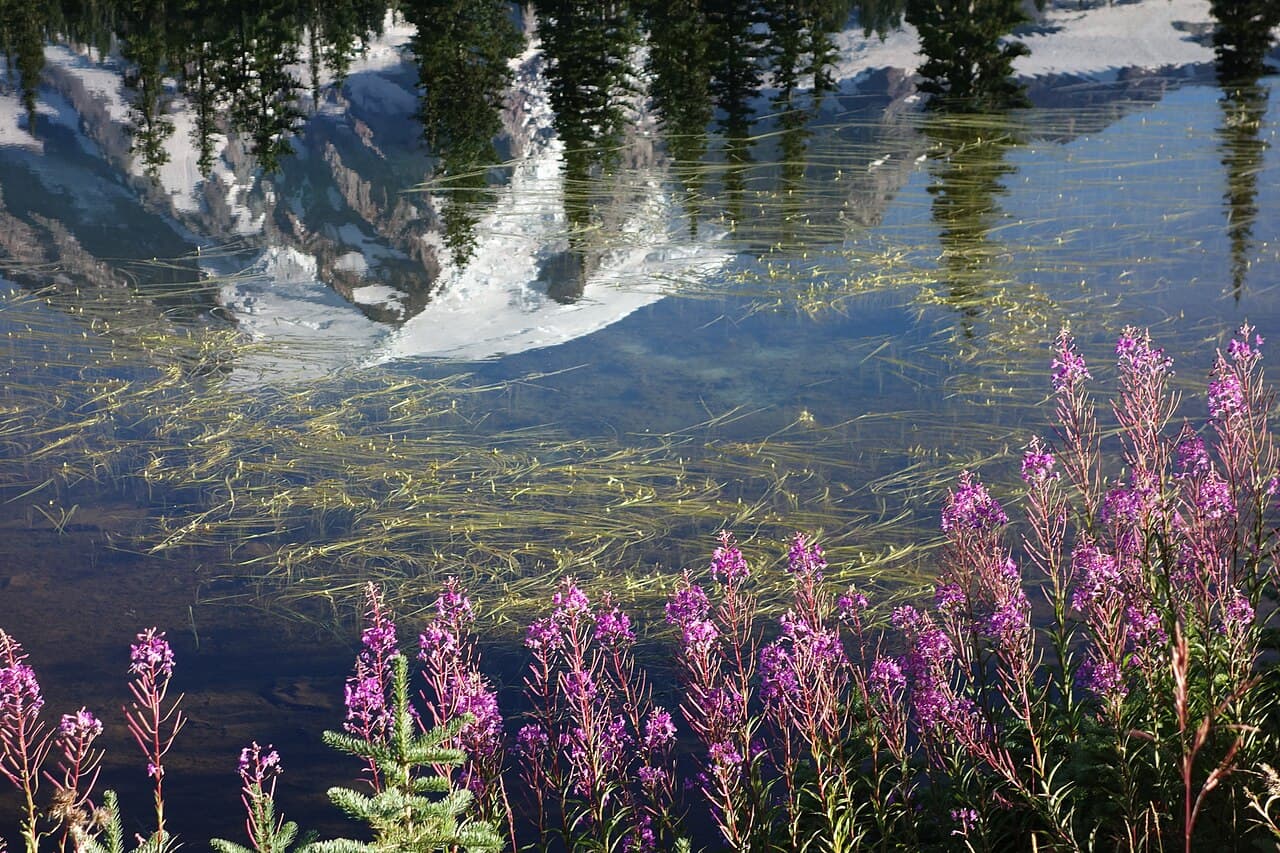
Camp below a 14,411-foot volcano that generates its own weather. Trailside camps sit in the forest with a privy, a bear pole and a water source; alpine zones put you on permanent snow with the mountain directly overhead and blue bags in your pack.

Rainier Wilderness hike highlights

  1. One permit covers the trip; a climbing permit is required on top of it above 10,000 feet or on glaciers
  2. Permits must be collected in person, no more than one day before your start date
  3. Party size of 5 at trailside sites, cross-country zones and bare ground in alpine zones; 6-12 counts as a group
  4. Group sites exist at 25 designated camps; alpine zones take 12 only when camping on snow
  5. Four consecutive nights maximum in any one camp or zone
  6. Trailside camps have privies, marked sites, bear poles and a nearby water source
  7. A parkwide fire ban has been in effect since June 26, 2026

How hard the Rainier Wilderness hike is

  • Physical DemandFitness and endurance required4/5
  • Technical SkillClimbing, scrambling, or specialized skills3/5
  • Exposure RiskSteep dropoffs and fall potential3/5
  • NavigationRoute finding and trail clarity3/5
  • CommitmentDifficulty of bailing out mid-route4/5

Best for: Backpackers ready for a big glaciated volcano. The trailside camps are approachable; the cross-country and alpine zones are not.

Recommended experience: Multi-day backpacking in mountain weather. Above 10,000 feet or on any glacier you need a separate climbing permit and the skills that go with it. The exposure rating reflects the alpine and cross-country zones this permit covers, not the forested trailside camps.

Not recommended for: Anyone planning to camp in an alpine zone without blue bags and snow skills, and anyone counting on picking up a permit remotely. Rainier makes you show up in person.

Trailhead information

Longmire

Primary

Home of the Longmire Wilderness Information Center, and mile 0 on the Wonderland Trail. NPS lists it as a permit pick-up location.

  • No restrooms
  • No water

Getting There

All vehicles must carry tire chains in the park during the winter season, November 1 to May 1. NPS says this applies to all vehicles including four-wheel drive, regardless of tire type or weather.

Nearest Services

Longmire and Ashford.

Notes

A reservation is not a permit. NPS says the person named on the reservation must come into a ranger station to have it activated, and the ranger checks photo ID.

Trailhead information

Paradise

The main south-side hub, and the start for Snow Lake, Paradise River and the Muir climbing corridor.

  • No restrooms
  • No water

Getting There

NPS says October to April climbers can self-register at the Paradise Old Ranger Station, and that the climbing fee must be paid before self-registration.

Nearest Services

Paradise visitor services.

Trailhead information

White River

Normal start for Glacier Basin and the eastern Wonderland. NPS gives White River Campground as mile 60.3 clockwise from Longmire on the Wonderland Trail.

  • No restrooms
  • No water

Trailhead information

Sunrise

The highest road access in the park. NPS gives the Sunrise parking lot as mile 57.4 clockwise from Longmire on the Wonderland Trail, half a mile off the trail itself.

  • No restrooms
  • No water

Trailhead information

Mowich Lake

Alternate

Mile 34.3 clockwise from Longmire on the Wonderland Trail, and the start of the Spray Park alternate.

  • No restrooms
  • No water

Trailhead information

Westside Road

Alternate

West-side access. NPS advises that Westside Road is an active geohazard zone: because of rockfall danger, vehicles must park south of the barricade at Dry Creek when the road is open, and hikers and bicyclists should travel through with caution and avoid lingering in the hazard zone.

  • No restrooms
  • No water

Nearest Services

Ashford.

When to hike Rainier Wilderness

Best time to visit

Late July through September, once high camps melt out and before the autumn storms. The reservable season ends October 12, and the wilderness information centers close October 13. After that, permits are first-come, first-served at the Longmire Museum and winter party-size and camping rules take over. For 2026 specifically, plan around the Grand Park 2 Fire closures on the Sunrise and White River side.

Weather Forecast

Trailhead (5,000 ft)

⚠️

Backcountry Tips

  • Today: Wind gusts to 60mph. Secure tent, avoid exposed ridges.
  • Today: 73% chance of precipitation. Pack rain gear.
  • Tomorrow: Wind gusts to 46mph. Secure tent, avoid exposed ridges.

Today

🌧️

44°

38°

73%

Wed

☁️

41°

38°

Thu

☁️

47°

35°

Fri

☁️

50°

36°

Sat

☀️

56°

34°

Sun

☁️

60°

38°

Mon

☁️

51°

32°

View full NWS forecast →Mountain weather changes rapidly. This forecast is a guide—always be prepared for worse conditions.

Rainier Wilderness photography guide

Golden Hour

Alpenglow on the summit ice from any west-facing camp, and first light off the Tatoosh Range from the Longmire side.

Best Light

Clear mornings before the mountain builds its own afternoon cloud. By 2 pm in summer the summit is often gone.

Beat the Crowds

Day-use crowds concentrate at Paradise and Sunrise. Anything more than three miles from a road is quiet, and with the Sunrise side closed in 2026 the east of the park is quieter still.

Classic Shots

  1. The summit from a subalpine meadow camp at first light
  2. Glacier-fed streams running milky grey with rock flour
  3. Wildflower meadows in late July and early August
  4. Tents on snow in an alpine zone with the mountain behind
  5. Old-growth forest along the low trailside camps

Rainier Wilderness rules, gear and safety

Gear checklist

Required
  • A stove that burns liquefied or bottled fuel: the parkwide fire ban has been in effect since June 26, 2026
  • Blue bags if any part of your trip is in an alpine zone
  • Rain and wind protection sized for a mountain that makes its own weather
  • Water treatment
  • A trowel for cathole use in cross-country zones: six to eight inches deep, four to six across, and pack the paper out

Recommended gear

  • A bear canister for subalpine areas without tall trees: the park recommends but does not require one
  • Traction and an ice axe for early-season snow on any high camp
  • Trekking poles
  • A tent that handles sustained rain

Rules & regulations

  1. 01A wilderness permit is required year-round for all overnight stays in the backcountry
  2. 02A climbing permit is required for travel above 10,000 feet or on glaciers
  3. 03Summer party size is 5 at individual trailside sites, in cross-country zones, and on bare ground in alpine zones; groups of 6 to 12 need a group site, or snow in an alpine zone. Winter is 12 everywhere
  4. 04Maximum four consecutive nights in any one camp or zone
  5. 05Cross-country camps must be at least a quarter mile from any road or established trail and 100 feet from lakes, streams and wetlands
  6. 06Hikers doing the complete Wonderland Trail must camp in designated camps only, not in cross-country zones
  7. 07Alpine-zone camping is allowed only on permanent snow or ice, or on bare ground previously used as a campsite
  8. 08Climbers in alpine zones are required to use the Blue Bag system and pack waste out
  9. 09Parkwide fire ban since June 26, 2026: stoves burning liquefied or bottled fuel are still permitted; bio-fuel stoves that burn twigs or cones are not
  10. 10Your reservation is cancelled if you do not appear by 12:00 pm on your start date
  11. 11Four consecutive nights is the maximum stay in any one camp or zone (a single permit can still cover up to 13 consecutive nights across the trip)
  12. 12Camping within 100 feet of water is prohibited except in a designated campsite
  13. 13The three designated camps on climbing routes are metered by TOTAL PEOPLE rather than by party, unlike every other camp on this permit

Hazards & considerations

  • The Grand Park 2 Fire, with Sunrise Road and White River Road to SR 410 closed until further notice as of August 7, 2026, and air quality logged as unhealthy on August 6
  • Weather that turns fast at any elevation on this mountain
  • Snow lingering at high camps well past the calendar start of summer
  • Glacier and above-10,000-foot travel, which needs its own climbing permit and its own skills
  • River crossings on glacier-fed streams that rise through the day

Safety & planning

Emergency Info

Emergency contacts, ranger station locations, and satellite communicator tips for Rainier Wilderness.

Food Storage

Bear canister requirements, approved container lists, and rental locations for this permit.

Gear Checklist: Required and recommended gear for Rainier Wilderness · Shuttle Services: Trailhead transportation options · Guide Services: Experienced wilderness guides

Some links may be affiliate links. Purchases support PermitSnag at no extra cost to you.

Rainier Wilderness FAQ

Do I need a permit to camp in the Mount Rainier wilderness?

Yes, year-round, for every overnight stay in the backcountry. A separate climbing permit is required on top of it for travel above 10,000 feet or on glaciers. Permits must be obtained in person at a wilderness information center or visitor center. A Recreation.gov reservation is not itself the permit.

What is the group size limit for a Mount Rainier wilderness permit?

In summer, five people at individual sites in trailside designated camps, in cross-country zones, and camping on bare ground in alpine zones. Parties of 6 to 12 count as a group and must use one of the group sites the park maintains at 25 designated camps, or camp on snow in an alpine zone. In winter the limit is 12 for all areas. Summer here means May 15 to September 30, plus any date outside that when snow depth is under two feet.

How much does a Mount Rainier wilderness permit cost?

$6 to Recreation.gov plus $12 per person per night, for up to 13 consecutive nights. Youth 15 and under are free. Walk-up permits carry the same $12 per person per night plus the same non-refundable $6 fee, and payment is card only, no cash.

When does the lottery open for a Mount Rainier wilderness permit?

For 2026 the early-access lottery took applications from February 10 at 7:00 am PT until March 3 at 7:00 pm PT, with results on March 14 and awarded booking windows opening March 21. General on-sale was April 25 at 7:00 am PT. The park says the lottery opens in February each year and points to Recreation.gov for the exact dates.

Can I get a walk-up wilderness permit at Mount Rainier?

Yes. The park says about two thirds of summer backpacking and climbing permits are released for advance reservation and the remaining one third are issued at wilderness information centers first-come, first-served, requestable no more than one day before your start date.

Do I need a bear canister at Mount Rainier?

No. All camps have food storage poles for hanging, and the park's wording is that in some subalpine areas without tall trees the use of a bear-proof canister is highly recommended. It is a recommendation here, not a requirement, which is different from Glacier, Grand Teton or Olympic.

Which Mount Rainier wilderness information centers are open in 2026?

Longmire and Paradise are both open and issuing permits. The White River Wilderness Information Center is behind the Grand Park 2 Fire closure: Sunrise Road and White River Road to SR 410 have been closed until further notice as of the park's August 7, 2026 update. The Carbon River Ranger Station is closed until further notice because of the SR 165 Fairfax Bridge closure outside the park, and the Jackson Visitor Center does not process wilderness permits in summer.

Rainier Wilderness trail conditions and trip reports

Trail Conditions(7)

Questions

No questions yet

Be the first to ask about Rainier Wilderness.

Trip Reports

Write Report

No trip reports yet

Be the first to share your experience at Rainier Wilderness.

Write the First Report

Alternatives to a Rainier Wilderness permit

  • Similar ExperiencePermit required

    Wonderland Trail

    The 93-mile circuit of the mountain, booked through the same permit system.

    Tradeoffs

    The park's marquee trip and by far the hardest itinerary to assemble. Complete-circuit hikers are restricted to designated camps and may not use cross-country zones.

  • Similar ExperiencePermit required

    Olympic Wilderness Permit

    Rainforest, coast and alpine on the Olympic Peninsula, at $6 per permit plus $8 per person per night.

    Tradeoffs

    No lottery (the whole summer releases on April 15 at 7:00 am Pacific), and permits can be issued without an in-person visit. Bear canisters are required there, not just recommended.

  • Similar ExperiencePermit required

    North Cascades Backcountry

    Big glaciated country three hours north, on a camp-based permit with its own early-access lottery.

    Tradeoffs

    Less crowded and cheaper at $10 per person plus a $6 fee, but the road access is more fragile and several Chilliwack-area camps are closed for fire damage.

Where to stay near Rainier Wilderness

Plan the full trip, not just the permit

Build your full itinerary start to finish

Add your dates and get a day-by-day plan: what needs a permit, what gear to bring, and one link to share with your whole group to coordinate every step.

Plan a trip here

No permit needed to start

Two ways to land it

Track cancellations or run a lottery pool

Core feature

Fast Lane tracking

We check Rainier Wilderness for cancellations 24/7 and alert you when a spot opens so you can book before it's gone.

Set a free cancellation alert
Pro or $19 alert

Lottery pool

Apply with a crew. Each person multiplies your combined odds. We coordinate invites, deadlines, and outcomes.

See plans to start a pool

Most crews do both: get alerts for cancellations, and pool for the lottery.

Lottery concierge

Your next shot at Rainier Wilderness

Missed the draw or skipped it? Set an alert and we tell you the moment a Rainier Wilderness cancellation opens. We remind you about the lottery dates too.

Better odds with a crew

Rainier Wilderness permits are drawn by lottery. Every friend who applies adds another entry, so a crew gets more shots at the same permit than any one of you alone.

One of you runs the pool (Pro or a $19 alert). Everyone else joins free.

Know the moment you win

Auto win-detection tells you the moment your Rainier Wilderness application wins, so you never have to check Recreation.gov. It reads the result email you forward us, so it takes a one-time setup in your inbox (about two minutes, and we walk you through it). Auto win-detection is on Pro or a $19 permit alert.

Turn on auto win-detection
Apply now on Recreation.gov

Opens the official lottery. You submit your entry. We never automate or store your Recreation.gov login.

One tick helps us more than you’d think

Google lets you pick the sites it highlights for you. Add PermitSnag and our permit pages get marked as one of yours in AI Overviews and AI Mode.

Add PermitSnag in Google

Takes less than a minute.