Skip to content
Wilderness Camping permit area in Rocky Mountain National Park - backcountry hiking destination
Booked one camp per night, in order

Wilderness Camping Permit

Rocky Mountain National Park · Colorado

General backcountry permit.

Get an alert when a spot opens in your RMNP Wilderness zone.

Pick the zone you need

RMNP Wilderness sells by zone. Pick the one you need and we'll scan just that zone for openings, so you don't hear about areas you can't use.

Party

When it opens

3 days
Reserve at least three days before your entry date

Source: nps.gov

70% of the openings our scanner caught on RMNP Wilderness were gone within 10 minutes.

RMNP Wilderness reservation dates

Application window
Opens Not a lottery. Summer reservations opened March 1, 2026 at 8:00 am MST
Season
May 1 to October 31
max group size
12people

How to get a RMNP Wilderness permit

As of September 2026, RMNP Wilderness in Rocky Mountain National Park, Colorado requires a permit issued via reservation. RMNP Wilderness rates 6/10 on PermitSnag's demand index. Cancelled RMNP Wilderness permits are re-released on the booking system, and PermitSnag alerts you the moment one opens. The permit season for RMNP Wilderness runs May 1 through October 31.

Type
Overnight
Location
Front Range, CO
  1. Step 1: Create a Recreation.gov account

    Sign up at Recreation.gov if you don't have an account. Have your payment info ready.

  2. Step 2: Know the release schedule

    Permits release on a rolling basis. Check the release time for your dates.

  3. Step 3: Be ready when permits drop

    Log in a few minutes early. Have your dates, group size, and payment ready to go.

  4. Step 4: Monitor for cancellations

    If your dates are sold out, people cancel all the time. Set up PermitSnag alerts to catch openings instantly.

RMNP Wilderness pro tips

  1. The flat $36 makes this the cheapest permit per person of any major park for a group. Six people on a four-night trip pay $36 total.
  2. Book March 1 at 8:00 am MST. The park releases the entire summer at once and does not run a lottery.
  3. Buy the canister before you book. RMNP accepts nothing else (no hangs, no sacks) between April 1 and October 31.
  4. Cross-country zones never appear on Recreation.gov. If you want one, phone the Wilderness Office.
  5. Collect the permit before noon on your first day or it gets cancelled and reissued to somebody else.

More on RMNP Wilderness: Live availability activityWhen RMNP Wilderness permits open up

How much a RMNP Wilderness permit costs

RMNP Wilderness permit fee: $36 Wilderness Administrative Fee per trip reservation (not per night and not per person), non-refundable, May 1 to October 31. Winter reservations are $10. Park entrance fees are separate.

The RMNP Wilderness hike

Route Type
Varies
Duration
NPS allows no more than 3 consecutive nights in one camp area.

RMNP Wilderness landmarks

  1. 1Thunder Lake

    Wild Basin site 055. 4 sites, 2,070 feet of gain, privy on site, 20-year average snow-free date 7/5.

  2. 2Sandbeach Lake

    Wild Basin site 049. 4 sites, 1,970 feet of gain, privy on site, average snow-free date 6/18.

  3. 3Ouzel Lake

    Wild Basin site 056. A single site, 1,520 feet of gain, privy on site, average snow-free date 6/16. Not to be confused with the Ouzel Falls campsite, which is in Yellowstone.

  4. 4Upper Ouzel Creek

    Wild Basin site 057. A single site, 2,100 feet of gain, no privy, average snow-free date 7/6.

  5. 5Glacier Gorge

    One site, 760 feet of gain from the Glacier Gorge Trailhead. No privy: campers pack in and pack out human waste bags, and deposit them in a trash can on return.

  6. 6Boulderfield

    The highest bookable site on this permit, in the Longs Peak district. 9 sites inside rock rings, 3,360 feet of gain from the Longs Peak Trailhead.

265,828 acres, every legal campsite numbered and assigned, one flat $36 fee for the whole trip no matter how many nights or how many people.

About this permit

A wilderness permit is required to camp overnight anywhere in the wilderness of Rocky Mountain National Park, and the park states plainly that to minimize impact the number of permits issued is limited. There is no dispersed camping. The park is a designated site wilderness.

The fee is a $36 Wilderness Administrative Fee for each trip reservation, not each night and not each person, non-refundable, from May 1 through October 31. Winter reservations from November 1 to April 30 cost $10. Walk-ins pay the same $36. Reservations for summer 2026 opened March 1 at 8:00 am MST and must be made at least three days before your first camping date; between November 1 and April 30 the park does not accept reservation requests at all, so winter trips are arranged directly with the Wilderness Office.

Party size is 1 to 7 at individual sites and 8 to 12 at group sites, and the park closes the obvious loophole: groups over seven persons may not camp in neighbouring individual sites and must either use group sites or split up and camp at least one mile apart. Stay limits are seven nights June through September, fourteen October through May with no more than 21 per year, and no more than three consecutive nights in one camp area.

Bear canisters are required between April 1 and October 31 (hard-sided, commercially made, carry-in/carry-out) for park wilderness areas below tree line and in the Boulder Field of Longs Peak, with no other food storage method permitted, stored 200 feet from your campsite. Campfires are prohibited in the wilderness; portable stoves only.

Permits and dashtags must be picked up in person at a Wilderness Office, open 7 am to 3:30 pm daily, and are cancelled and reissued if not collected by noon on your first day. A wilderness permit serves as your timed entry reservation. You still need a valid park entrance fee or pass, and you must collect the physical permit first. There is one accessible site at Sprague Lake that takes up to 12 campers including a maximum of five wheelchairs, for up to three consecutive nights, available year-round and reserved by phone on (970) 586-1242.

The route

The system has three parts. Designated sites are the default and cover most of the park. Group sites take parties of 8 to 12 and are separate bookings. Cross-country zones (which the park calls the least travelled and least accessible places in Rocky Mountain National Park, with no developed campsites, no developed trails and no pit toilets, all below treeline) cannot be booked online at all; you contact the Wilderness Office to check availability, and the same applies to stock and bivy sites.

The stay limits are seasonal: seven nights June through September, fourteen nights October through May with a 21-night annual cap, and never more than three consecutive nights in one camp area.

Why it matters

Rocky Mountain is a designated-site wilderness. There is no dispersed camping anywhere in it, which means the permit is not a formality: it is the assignment of a specific place on specific nights. The park limits the number of permits issued precisely so that the sites stay worth having.
The feeling

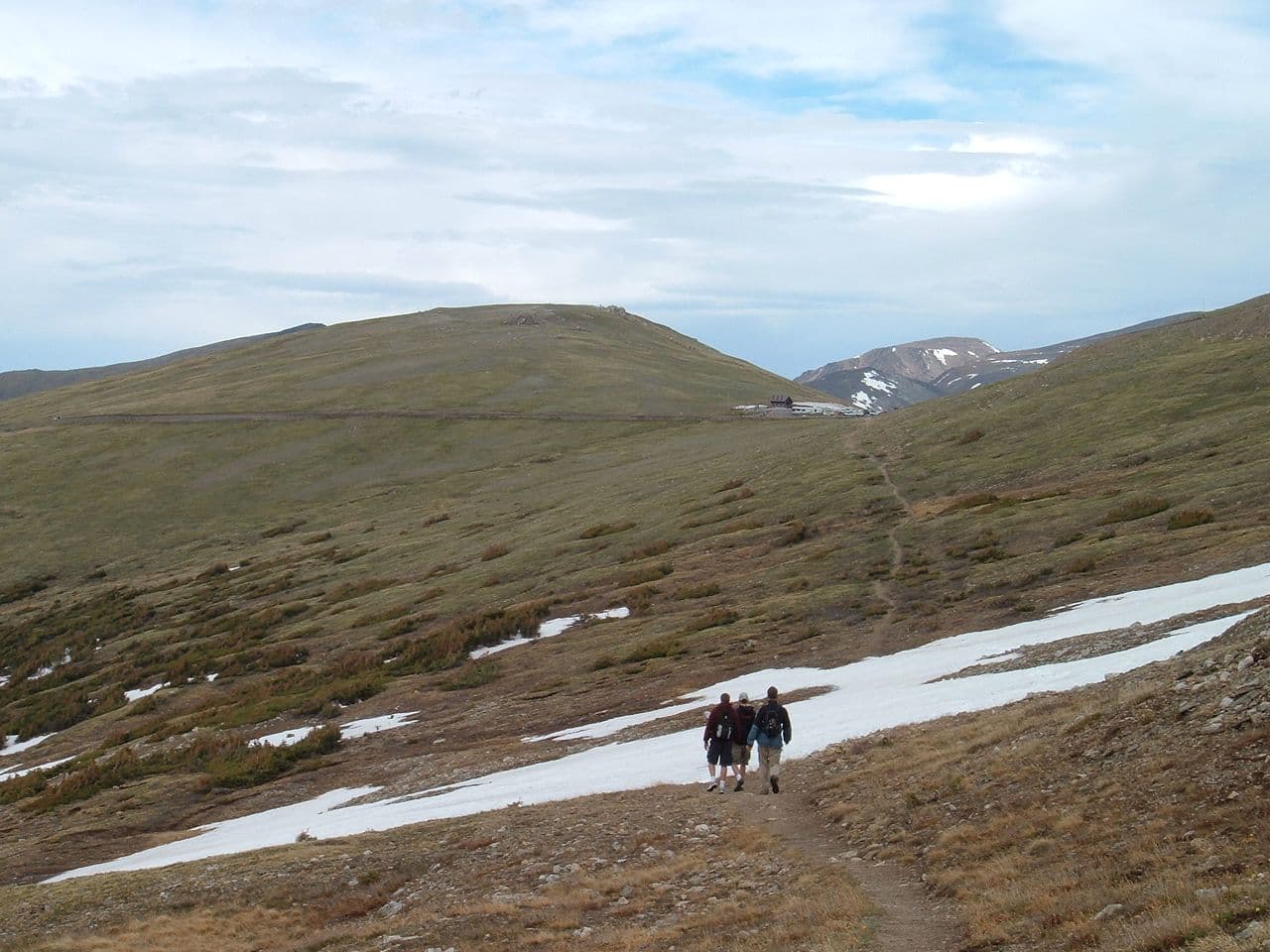
Sites are small clearings with a privy nearby and a canister sitting 200 feet away in the trees. Above the trees, camp areas turn into talus and krummholz and the wind does not stop.

RMNP Wilderness hike highlights

  1. A designated site wilderness: no dispersed camping anywhere in the park
  2. $36 per trip reservation regardless of party size or number of nights; $10 in winter
  3. 1 to 7 people at individual sites, 8 to 12 at group sites
  4. Cross-country zones, stock sites and bivy sites are not bookable online: call the Wilderness Office
  5. Bear canisters required April 1 to October 31, with no substitutes accepted
  6. No campfires; portable stoves only
  7. The permit doubles as your timed entry reservation once you hold the physical copy

How hard the RMNP Wilderness hike is

  • Physical DemandFitness and endurance required3/5
  • Technical SkillClimbing, scrambling, or specialized skills2/5
  • Exposure RiskSteep dropoffs and fall potential3/5
  • NavigationRoute finding and trail clarity3/5
  • CommitmentDifficulty of bailing out mid-route3/5

Best for: Backpackers who want high country close to a city, and are happy with a system that tells them exactly where to sleep.

Recommended experience: General backpacking plus altitude tolerance. Cross-country zones want real navigation: there are no trails and no privies in them.

Not recommended for: Anyone unacclimatised to altitude, and anyone hoping to camp wherever looks good: dispersed camping does not exist here.

Trailhead information

Bear Lake Trailhead

Primary

9,475 ft elevation

The busiest access on the east side, and the way into the Bear Lake area sites.

  • No restrooms
  • No water

Parking

NPS says parking at any specific trailhead is not guaranteed and advises wilderness users to arrive early. Parking is free, and a dash tag is issued for overnight parking and must be displayed on the vehicle.

Notes

Permits are picked up in person at the Wilderness Office near Beaver Meadows Visitor Center, 1000 U.S. Hwy 36, Estes Park, CO 80517, open year round 7 a.m. to 3:30 p.m. daily. Phone 970-586-1242.

Trailhead information

Glacier Gorge Trailhead

9,240 ft elevation

Access for the Glacier Gorge, Andrews Creek and Boulder Brook sites. NPS marks all three HWB, meaning campers are strongly encouraged to carry out human waste in the biodegradable bags the park provides. The Boulder Brook group site has a privy.

  • No restrooms
  • No water

Trailhead information

Longs Peak Trailhead

9,405 ft elevation

The Longs Peak area sites, from Goblins Forest at 1.2 miles and 10,120 feet to the Boulderfield at 6 miles and 12,760 feet.

  • No restrooms
  • No water

Trailhead information

Wild Basin Trailhead

8,500 ft elevation

Thunder Lake, Ouzel Lake, Upper Ouzel Creek, Finch Lake and Pear Lake all start here.

  • No restrooms
  • No water

Trailhead information

Sandbeach Lake Trailhead

8,310 ft elevation

The lowest of the east-side trailheads on this permit. NPS gives 4.2 miles and 1,970 feet of gain to the Sandbeach Lake sites.

  • No restrooms
  • No water

Trailhead information

Milner Pass Trailhead

10,760 ft elevation

The highest trailhead NPS publishes for this permit, on the Trail Ridge side.

  • No restrooms
  • No water

Trailhead information

Lawn Lake Trailhead

8,540 ft elevation

Access to the Mummy Range sites.

  • No restrooms
  • No water

Trailhead information

Dunraven Trailhead

Alternate

7,797 ft elevation

North Fork access.

  • No restrooms
  • No water

When to hike RMNP Wilderness

Best time to visit

Late June through September, when the higher camp areas are snow-free and the seven-night summer limit applies. October through May allows fourteen nights and costs $10, but reservation requests are not accepted for those dates. You arrange them through the Wilderness Office.

Weather Forecast

Trailhead (5,000 ft)

⚠️

Backcountry Tips

  • Day 3: 62% chance of precipitation. Pack rain gear.

Today

🌧️

44°

37°

31%

Tue

🌧️

41°

34°

26%

Wed

🌧️

41°

34°

62%

Thu

☁️

56°

31°

52%

Fri

⛅

58°

34°

Sat

☁️

59°

31°

Sun

☁️

59°

31°

View full NWS forecast →Mountain weather changes rapidly. This forecast is a guide—always be prepared for worse conditions.

RMNP Wilderness photography guide

Golden Hour

First light on the Continental Divide from any east-facing camp, and last light on the Never Summer Range from the west side.

Best Light

Mornings. Front Range storms build early and often, and by afternoon the peaks are usually in cloud.

Beat the Crowds

Bear Lake and Longs Peak absorb nearly all the traffic. The park's west side and the northern camp areas are quiet even in August.

Classic Shots

  1. The Divide from a treeline camp at dawn
  2. Krummholz sculpted flat by wind above 11,000 feet
  3. Elk in the meadows in September
  4. Alpine lakes still holding ice in late June
  5. The Never Summer Range from the park's west side

RMNP Wilderness rules, gear and safety

Gear checklist

Required
  • A hard-sided commercial bear canister, the only accepted method between April 1 and October 31
  • A stove; campfires are prohibited park-wide in the wilderness
  • Layers for nights below freezing at any time of year above 10,000 feet
  • Water treatment
  • A map: cross-country zones have no developed trails at all

Recommended gear

  • Trekking poles
  • Traction for early and late season
  • A wind-worthy shelter for anything near or above treeline
  • A dashtag holder for the windshield, which the park issues with the permit

Rules & regulations

  1. 01A wilderness permit is required to camp overnight in the wilderness of Rocky Mountain National Park
  2. 02Individual sites take parties of 1 to 7; group sites take 8 to 12; groups over 7 may not camp in neighbouring individual sites
  3. 03Between April 1 and October 31 all food, scented items and garbage must be stored in a hard-sided commercially made bear-resistant canister, placed 200 feet from the campsite
  4. 04Maximum 7 nights June through September; 14 nights October through May, capped at 21 nights per year
  5. 05No more than 3 consecutive nights in one camp area
  6. 06Campfires are prohibited; use portable stoves only
  7. 07Reservation requests must be made at least 3 days before the first camping date
  8. 08Permits and dashtags are collected in person and cancelled if not picked up by noon on day one

Hazards & considerations

  • Afternoon thunderstorms, which build over the Front Range almost daily in summer
  • Altitude across most of the park's camp areas
  • Wildlife incidents that drove the canister rule, including at the Boulder Field of Longs Peak
  • Snow lingering at higher camps into late June
  • Cross-country zones with no trails, no privies and no developed sites

Safety & planning

Emergency Info

Emergency contacts, ranger station locations, and satellite communicator tips for RMNP Wilderness.

Food Storage

Bear canister requirements, approved container lists, and rental locations for this permit.

Gear Checklist: Required and recommended gear for RMNP Wilderness · Shuttle Services: Trailhead transportation options · Guide Services: Experienced wilderness guides

Some links may be affiliate links. Purchases support PermitSnag at no extra cost to you.

RMNP Wilderness FAQ

Do I need a permit to backpack in Rocky Mountain National Park?

Yes. A wilderness permit is required to camp overnight in the park's wilderness, and the park limits how many it issues. There is no dispersed camping. Rocky Mountain is a designated site wilderness, so your permit names a specific site.

How much does a Rocky Mountain wilderness permit cost?

$36 per trip reservation from May 1 to October 31 (not per night, and not per person), and it is non-refundable. Winter reservations from November 1 to April 30 cost $10. Walk-ins pay the same $36. The park entrance fee is separate.

When do reservations open for a Rocky Mountain wilderness permit?

For the 2026 summer season they opened March 1 at 8:00 am MST on Recreation.gov, covering camping dates May 1 through October 31. Requests must be made at least three days before your first camping date. The park does not accept reservation requests for November 1 through April 30 at all.

Do I need a bear canister in Rocky Mountain National Park?

Yes, from April 1 to October 31. All food, scented items and garbage must be secured inside a hard sided commercially made carry-in/carry-out bear-resistant canister, in park wilderness areas below tree line and in the Boulder Field of Longs Peak. The park states that other methods of food storage are not permitted during this period. Store it 70 adult steps (200 feet) from your campsite.

Can a group of ten get a Rocky Mountain wilderness permit?

Yes, at a group site. Those take parties of 8 to 12. Individual sites take 1 to 7. The park specifically does not allow groups over seven to camp in neighbouring individual sites; you either book a group site or split up and camp at least a mile apart.

Does a Rocky Mountain wilderness permit include timed entry?

Yes. The park says a Wilderness Overnight Backpacking permit serves as your timed entry reservation. You must pick up the physical permit at a Wilderness Office first, and you still need a valid park entrance fee or pass. Timed entry runs 9 am to 2 pm daily from May 22 through October 12, 2026, and the Bear Lake Road corridor runs 5 am to 6 pm through October 18.

Can I camp in a cross-country zone in Rocky Mountain National Park?

Yes, but not by booking online. The park describes cross-country zones as its least travelled and least accessible places, with no developed campsites, no developed trails and no pit toilets, all below treeline. To reserve one, or a stock or bivy site, you contact the Wilderness Office directly to check availability.

RMNP Wilderness trail conditions and trip reports

Trail Conditions

No active conditions reported

Sign in to report trail conditions.

Questions

No questions yet

Be the first to ask about RMNP Wilderness.

Trip Reports

Write Report

No trip reports yet

Be the first to share your experience at RMNP Wilderness.

Write the First Report

Alternatives to a RMNP Wilderness permit

  • Same AreaPermit required

    Longs Peak Overnight

    The four camps on the Longs Peak trail, topping out at the Boulderfield at 12,760 feet.

    Tradeoffs

    The park's most sought-after camps and the one place the canister rule reaches above treeline. Same permit, same fee.

  • Similar ExperiencePermit required

    Grand Teton Backcountry Permit

    Zone-based mountain camping in the Tetons, with about two thirds of permits held for walk-ups.

    Tradeoffs

    $20 plus $7 per person per night rather than a flat $36, and far better walk-up odds, but a longer drive and a mandatory canister there too.

  • Same AreaNo permit needed

    Collegiate Loop

    The 160-mile Colorado Trail circuit through the Collegiate Peaks, three hours southwest.

    Tradeoffs

    No permit needed and no reservation to chase, but no designated sites either, and the fire restrictions on the surrounding national forests can shut campfires down entirely.

Plan the full trip, not just the permit

Build your full itinerary start to finish

Add your dates and get a day-by-day plan: what needs a permit, what gear to bring, and one link to share with your whole group to coordinate every step.

Plan a trip here

No permit needed to start

One tick helps us more than you’d think

Google lets you pick the sites it highlights for you. Add PermitSnag and our permit pages get marked as one of yours in AI Overviews and AI Mode.

Add PermitSnag in Google

Takes less than a minute.