Skip to content
Yellowstone Backcountry Permit permit area in Yellowstone National Park - backcountry hiking destination
Cancellations all season · lottery when it opens

Yellowstone Backcountry Permit

Yellowstone National Park · Wyoming

Overnight backcountry camping permit for Yellowstone National Park. Cancellations return to Recreation.gov through the season, after an early-access lottery in spring and the general on-sale.

Get an alert when a spot opens in your Yellowstone Backcountry zone.

Pick the zone you need

Yellowstone Backcountry sells by zone. Pick the one you need and we'll scan just that zone for openings, so you don't hear about areas you can't use.

Party

70% of the openings our scanner caught on Yellowstone Backcountry were gone within 10 minutes.

Yellowstone Backcountry dates: cancellations and the lottery

We alert you to cancellations. The lottery runs March 1 to 20.

  • Cancellations
    We alert you the moment one opens.
  • Lottery
    Mar 1–20
  • Quota season
    May 15–Oct 31

Who issues Yellowstone Backcountry permits. Source: National Park Service: Yellowstone National Park. Read the official permit page. “Applications to participate in the lottery are accepted from March 1 8:00 AM MT to March 20 at 11:59 PM MT.”

max group size
12people

How to get a Yellowstone Backcountry permit

As of September 2026, Yellowstone Backcountry in Yellowstone National Park, Wyoming requires a permit issued via lottery. Yellowstone Backcountry is a high-demand permit, rating 7/10 on PermitSnag's demand index. Cancelled Yellowstone Backcountry permits are re-released on the booking system, and PermitSnag alerts you the moment one opens. The Yellowstone Backcountry lottery opens March 1, 2026 and closes March 20, 2026, with results announced March 25, 2026: winners get a randomized booking time between April 1 and 25.

Type
Overnight
Location
Greater Yellowstone, WY
  1. Step 1: Check for cancellations

    Permits get cancelled daily. Peak cancellation times are 24-48 hours before the trip date.

  2. Step 2: Set up PermitSnag alerts

    Get notified when cancellations happen. Pro and $19 single-permit alerts are checked about every minute, 24/7; free accounts are checked hourly.

  3. Step 3: Create a Recreation.gov account

    Sign up at Recreation.gov if you don't have an account. Verify your email and add payment info ahead of time.

  4. Step 4: Apply during the lottery window

    Submit your application between March 1, 2026 and March 20, 2026. Apply for multiple dates to increase your odds.

  5. Step 5: Wait for lottery results

    Results are announced March 25, 2026: winners get a randomized booking time between April 1 and 25. Check your email and your Recreation.gov account.

Yellowstone Backcountry pro tips

  1. Set a cancellation alert on Slough Creek, Bechler, Heart Lake or Shoshone Lake, the four areas Recreation.gov names as high-demand, and enter the March lottery for them too.
  2. Check each site's own limits before you build an itinerary. Group size, stay length and travel method all vary site by site, and a 12-person site next to a 4-person site is normal.
  3. Carry 35 feet of rope. The park says at least 35 feet for the food poles; Recreation.gov's site listings say 30, and the longer number is the safer one to pack.
  4. Book the walk-up as your plan B rather than your last resort: at least 25% of sites are held back for it every day.
  5. Build in a spare day in June and early July. High water on the unbridged crossings turns a planned itinerary into an improvised one.

More on Yellowstone Backcountry: Live availability activityWhen Yellowstone Backcountry permits open upYellowstone Backcountry lottery datesDo I need a Yellowstone Backcountry permit?Estimate your lottery oddsBoost your odds with a pool

How much a Yellowstone Backcountry permit costs

Yellowstone Backcountry permit fee: $5 per person per night plus a $10 reservation fee. The early access lottery application costs a separate, non-refundable $10; lottery winners do not pay the $10 reservation fee again.

The Yellowstone Backcountry hike

Route Type
Varies
Duration
Varies by itinerary. NPS allows a maximum of three consecutive nights at any one site, some campsites carry a 1- or 2-night limit, and you may book up to 14 nights on one permit if you are hiking from one campsite to the next.

Yellowstone Backcountry landmarks

  1. 1Bechler area

    The southwest corner, and the other high-demand district NPS calls out by name. Waterfalls and hydrothermal features, gated by river fords that NPS says are not crossable early in the season.

  2. 2Slough Creek

    Sites 2S1 through 2S6. NPS limits campers to 3 consecutive nights in the Slough Creek drainage from June 15 to September 15.

1,114 miles of trail, 293 numbered campsites, and a permit that names exactly which one you sleep at on which night.

About this permit

A backcountry permit is required year-round for all overnight stays in Yellowstone's backcountry, and each permit specifies a designated campsite and dates for you and your group. There are 293 of those campsites across 1,114 miles of trail. Group sizes are limited to 4 to 12 people depending on the site, stays run 1 to 3 nights, and except for four sites only one group is allowed per campsite.

The 2026 season ran on an early access lottery: applications March 1 to 20, notification March 25, and a randomized access window for winners between April 1 and April 25. General on-sale for peak season, May 15 to October 31, opened April 26. Non-peak season, November 1 to May 14, opens for booking on October 6.

Fees are $5 per person per night plus a $10 reservation fee, charged year-round whether you book on Recreation.gov or in person at a backcountry office. The early access lottery application is a separate non-refundable $10, and if you win it you do not pay the $10 reservation fee again.

A reservation is not a permit. Between May 15 and October 31 you pick the permit up at a backcountry office, up to two days before your trip. Recreation.gov names Slough Creek, the Bechler area, Heart Lake and Shoshone Lake as the high-demand areas worth entering the lottery for.

As of the park's August 9, 2026 situation report, fire danger is Very High with no current fire restrictions, and since July 29 the park's rivers and streams have been closed to fishing daily from 2 pm to sunrise because of high water temperatures and low stream flows.

The route

The park publishes the shape of the system plainly: 1,114 miles of trails and 293 designated backcountry campsites, each with limits on group size and stock, campsite stays ranging from 1 to 3 nights, and group sizes limited to 4 to 12 people. Except for four sites, only one group is allowed per campsite, so when you have a site, you have it to yourself. If your group exceeds a site's limit you need a second permit, and you must cook and sleep separately.

One permit can carry up to 14 nights if you are hiking site to site, with a maximum of three consecutive nights at any one site and some sites capped at one or two. Up to 75% of the campsites may be reserved in advance and at least 25% are left for walk-up permits daily.

Why it matters

Yellowstone's backcountry is bigger than most national parks put together and almost nobody uses it. The whole system runs on designated sites: you do not get a zone or a general area, you get a site number, and your permit says which nights you have it. That is what makes it plannable, and what makes the good sites go fast.
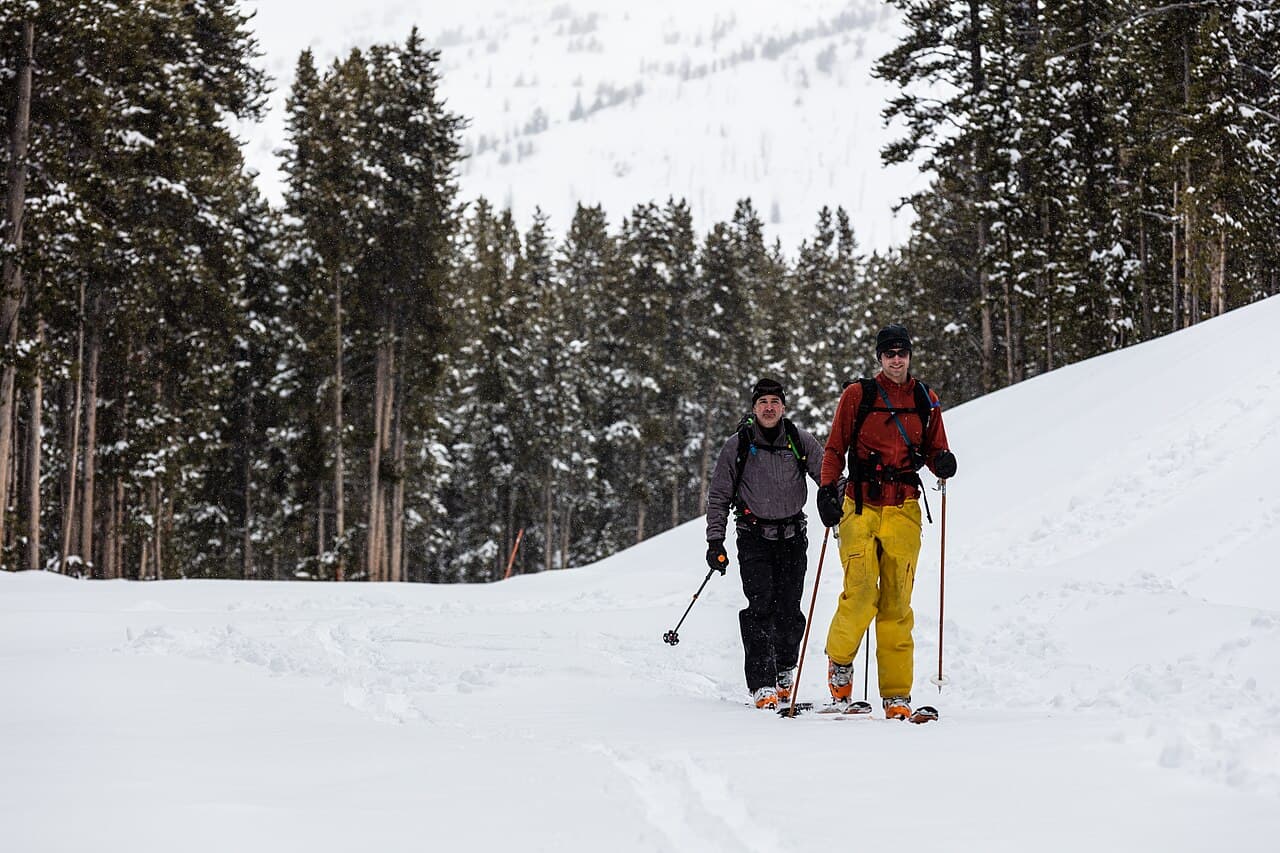
The feeling

Two miles from a boardwalk full of people you are on your own with bison trails, thermal steam rising off a meadow, and a food pole to hang everything from at night. Bear spray on your hip is not a precaution here, it is equipment.

Yellowstone Backcountry hike highlights

  1. A permit that names a specific numbered campsite for each night
  2. 293 designated backcountry campsites across 1,114 miles of trail
  3. Group size limits of 4 to 12 people, set per site
  4. Only one group per campsite, except at four sites
  5. Stays of 1 to 3 nights per site; up to 14 nights on one permit if you keep moving
  6. Up to 75% of sites reservable in advance, at least 25% held for daily walk-ups
  7. Pick the permit up in person at a backcountry office, up to two days ahead

How hard the Yellowstone Backcountry hike is

  • Physical DemandFitness and endurance required3/5
  • Technical SkillClimbing, scrambling, or specialized skills2/5
  • Exposure RiskSteep dropoffs and fall potential3/5
  • NavigationRoute finding and trail clarity3/5
  • CommitmentDifficulty of bailing out mid-route4/5

Best for: Backpackers comfortable being alone in grizzly country, on trails that are often faint and frequently unbridged.

Recommended experience: Bear-country camping, river fords, and enough navigation to tell a bison trail from a real one. The exposure rating is about thermal ground and wildlife, not about heights.

Not recommended for: First-time backpackers, and anyone unwilling to carry and practise with bear spray.

Trailhead information

Bechler Ranger Station Trailhead (9K1)

Primary

NPS trailhead 9K1 in the Bechler Area. Bechler is also one of the park's backcountry permit offices, so you can collect the permit where you start.

  • No restrooms
  • No water

Getting There

Along the Cave Falls Road, just north of the southern park boundary.

Notes

NPS lists the backcountry offices as Mammoth, Tower, Bridge Bay, Grant Village, South Entrance, West Yellowstone and Bechler. From May 15 to October 31 you pick the permit up in person at one of them, up to two days before the trip; from November 1 to May 14 you call the Central Backcountry Office instead.

Trailhead information

Cave Falls Trailhead (9K2)

NPS trailhead 9K2 in the Bechler Area, on the Bechler River Trail and the South Boundary Trail.

  • No restrooms
  • No water

Getting There

Along the Cave Falls Road, just north of the southern park boundary.

Notes

NPS says the fording of Fall River near the Cave Falls Trailhead is wide and dangerous, and not recommended.

Trailhead information

DeLacy Creek Trailhead (7K2)

NPS trailhead 7K2 in the Grant Area, and the short way to Shoshone Lake: a 5.8-mile there-and-back to the shore.

  • No restrooms
  • No water

Notes

NPS lists two amenities here, an information kiosk or bulletin board and the trailhead itself. No toilet.

Trailhead information

Shoshone Lake / Dogshead Trailhead (8K1)

NPS trailhead 8K1, the longer approach to Shoshone Lake by way of the Lewis River Channel: a 10.8-mile there-and-back.

  • Restrooms
  • No water

Getting There

About 5 miles (8 km) south of the Grant Village intersection, just north of Lewis Lake on the west side of the road.

Notes

NPS lists a vault or composting toilet among the three amenities here, and marks the trailhead with a caution that grizzly bears frequent the area.

When to hike Yellowstone Backcountry

Best time to visit

Mid-July through September. June is beautiful and largely unwalkable in the low country: high water closes fords and the mosquitoes are serious. September gives the best combination of dry trail, cool nights and elk bugling. Peak season for permits runs May 15 to October 31.

Weather Forecast

Trailhead (5,000 ft)

Today

🌫️

58°

30°

Wed

☀️

61°

35°

Thu

☁️

61°

35°

Fri

☁️

62°

37°

Sat

☁️

64°

36°

Sun

☀️

68°

37°

Mon

☁️

68°

41°

View full NWS forecast →Mountain weather changes rapidly. This forecast is a guide—always be prepared for worse conditions.

Yellowstone Backcountry photography guide

Golden Hour

Steam off a backcountry thermal feature at sunrise, when the temperature difference makes it visible from a mile away.

Best Light

Cold mornings. Yellowstone's thermal areas photograph best when it is near freezing and the whole basin is smoking.

Beat the Crowds

Two miles from any trailhead is usually enough. The Lamar and Hayden valleys carry the wildlife-watching crowd along the road and almost none of it walks.

Classic Shots

  1. Backcountry geyser basins with no boardwalk in the frame
  2. Bison trails braiding across an open meadow
  3. A numbered campsite marker with a food pole behind it
  4. Elk in the meadows at first light in September
  5. The Absaroka Range from a high pass in the park's east

Yellowstone Backcountry rules, gear and safety

Gear checklist

Required
  • Bear spray, on your hip rather than in the pack
  • Rope for the food poles: the park says at least 35 feet, though Recreation.gov's site listings say 30, so carry 35
  • A hard-sided bear-resistant container if you prefer one to hanging; soft-sided containers are prohibited
  • Water treatment
  • Layers for nights that drop below freezing at 8,000 feet in any month

Recommended gear

  • Shoes you can ford in: most long Yellowstone routes cross unbridged water
  • A head net for the mosquito peak in late June and July
  • Trekking poles for river crossings
  • A map, because bison trails braid off the real one constantly

Rules & regulations

  1. 01A backcountry permit is required year-round for all overnight stays in the backcountry
  2. 02Maximum three consecutive nights at any one site; some sites are limited to one or two
  3. 03If your group exceeds a site's limit you need a second permit and must cook and sleep separately
  4. 04Secure all food and scented items by hanging them from the food poles or storing them in a bear-resistant food container. Soft-sided containers are not allowed
  5. 05Carry bear spray and know how to use it
  6. 06Bathing, soaking or swimming in water entirely of thermal origin is prohibited
  7. 07No off-trail travel in thermal areas
  8. 08A reservation is not a permit: collect the permit in person

Hazards & considerations

  • Grizzly and black bears throughout the park
  • Thermal ground. More than 20 people have died from burns after entering or falling into Yellowstone's hot springs, and the crust around them is thin and breakable
  • River fords that run high into July
  • Fire danger listed as Very High on August 9, 2026, with no restrictions currently in place
  • Bison, which are far more likely to injure you than a bear

Safety & planning

Emergency Info

Emergency contacts, ranger station locations, and satellite communicator tips for Yellowstone Backcountry.

Food Storage

Bear canister requirements, approved container lists, and rental locations for this permit.

Gear Checklist: Required and recommended gear for Yellowstone Backcountry · Shuttle Services: Trailhead transportation options · Guide Services: Experienced wilderness guides

Some links may be affiliate links. Purchases support PermitSnag at no extra cost to you.

Yellowstone Backcountry FAQ

Do I need a permit to camp in the Yellowstone backcountry?

Yes, year-round, for every overnight stay. The permit names a designated campsite and dates for you and your group. It costs $5 per person per night plus a $10 reservation fee.

When does the lottery open for a Yellowstone backcountry permit?

For 2026 the early access lottery took applications from March 1 to March 20, notified successful applicants on March 25, and gave them a randomized booking time between April 1 and April 25. General on-sale for the May 15 to October 31 peak season opened April 26. The non-peak season, November 1 to May 14, opens for booking on October 6.

How many people can stay at a Yellowstone backcountry campsite?

It depends on the site. The park sets group size limits of 4 to 12 people per campsite, and except for four sites only one group is allowed per campsite. If your party exceeds a site's limit you need a second permit and have to cook and sleep separately.

How many nights can I stay on one Yellowstone backcountry permit?

Up to 14, if you are hiking from one campsite to the next. There is a maximum of three consecutive nights at any one site, and some sites carry a one-night or two-night limit of their own.

Can I get a walk-up backcountry permit in Yellowstone?

Yes. The park reserves up to 75% of campsites for advance booking and leaves at least 25% for walk-up permits daily. Even with an advance reservation you still collect the permit in person at a backcountry office, up to two days before your trip during the May 15 to October 31 season.

Do I need a bear canister in Yellowstone?

Not necessarily. The park's rule is to secure all food and scented items either by hanging them from the food poles, which needs at least 35 feet of rope, or by storing them in a bear-resistant food container. Soft-sided containers are not allowed. Carry bear spray regardless.

Yellowstone Backcountry trail conditions and trip reports

Trail Conditions

No active conditions reported

Sign in to report trail conditions.

Questions

No questions yet

Be the first to ask about Yellowstone Backcountry.

Trip Reports

Write Report

No trip reports yet

Be the first to share your experience at Yellowstone Backcountry.

Write the First Report

Alternatives to a Yellowstone Backcountry permit

  • Same AreaPermit required

    Shoshone Lake

    The park's second-largest lake, reachable only on foot or by paddle, with 24 designated sites around it.

    Tradeoffs

    One of the four areas Recreation.gov names as high-demand, so worth the lottery. Boat-accessible sites are walk-up only before June 10.

  • Same AreaPermit required

    Bechler River

    Cascade Corner in the park's southwest, with more waterfalls than the rest of Yellowstone combined.

    Tradeoffs

    Also on the high-demand list, and with a hard timing constraint: the park does not recommend trips before July 10 because of flooding in Bechler Meadows.

  • Similar ExperiencePermit required

    Grand Teton Backcountry Permit

    Zone-based camping in the Tetons an hour south, with roughly two thirds of permits held for walk-ups.

    Tradeoffs

    Far better walk-up odds and far more dramatic terrain, but a bear canister is mandatory there and the camping is zone-based rather than site-based.

Where to stay near Yellowstone Backcountry

Plan the full trip, not just the permit

Build your full itinerary start to finish

Add your dates and get a day-by-day plan: what needs a permit, what gear to bring, and one link to share with your whole group to coordinate every step.

Plan a trip here

No permit needed to start

Two ways to land it

Track cancellations or run a lottery pool

Core feature

Fast Lane tracking

We check Yellowstone Backcountry for cancellations 24/7 and alert you when a spot opens so you can book before it's gone.

Set a free cancellation alert
Pro or $19 alert

Lottery pool

Apply with a crew. Each person multiplies your combined odds. We coordinate invites, deadlines, and outcomes.

See plans to start a pool

Most crews do both: get alerts for cancellations, and pool for the lottery.

Lottery concierge

Your next shot at Yellowstone Backcountry

Missed the draw or skipped it? Set an alert and we tell you the moment a Yellowstone Backcountry cancellation opens. We remind you about the lottery dates too.

Better odds with a crew

Yellowstone Backcountry permits are drawn by lottery. Every friend who applies adds another entry, so a crew gets more shots at the same permit than any one of you alone.

One of you runs the pool (Pro or a $19 alert). Everyone else joins free.

Know the moment you win

Auto win-detection tells you the moment your Yellowstone Backcountry application wins, so you never have to check Recreation.gov. It reads the result email you forward us, so it takes a one-time setup in your inbox (about two minutes, and we walk you through it). Auto win-detection is on Pro or a $19 permit alert.

Turn on auto win-detection
Apply now on Recreation.gov

Opens the official lottery. You submit your entry. We never automate or store your Recreation.gov login.

One tick helps us more than you’d think

Google lets you pick the sites it highlights for you. Add PermitSnag and our permit pages get marked as one of yours in AI Overviews and AI Mode.

Add PermitSnag in Google

Takes less than a minute.