About this permit
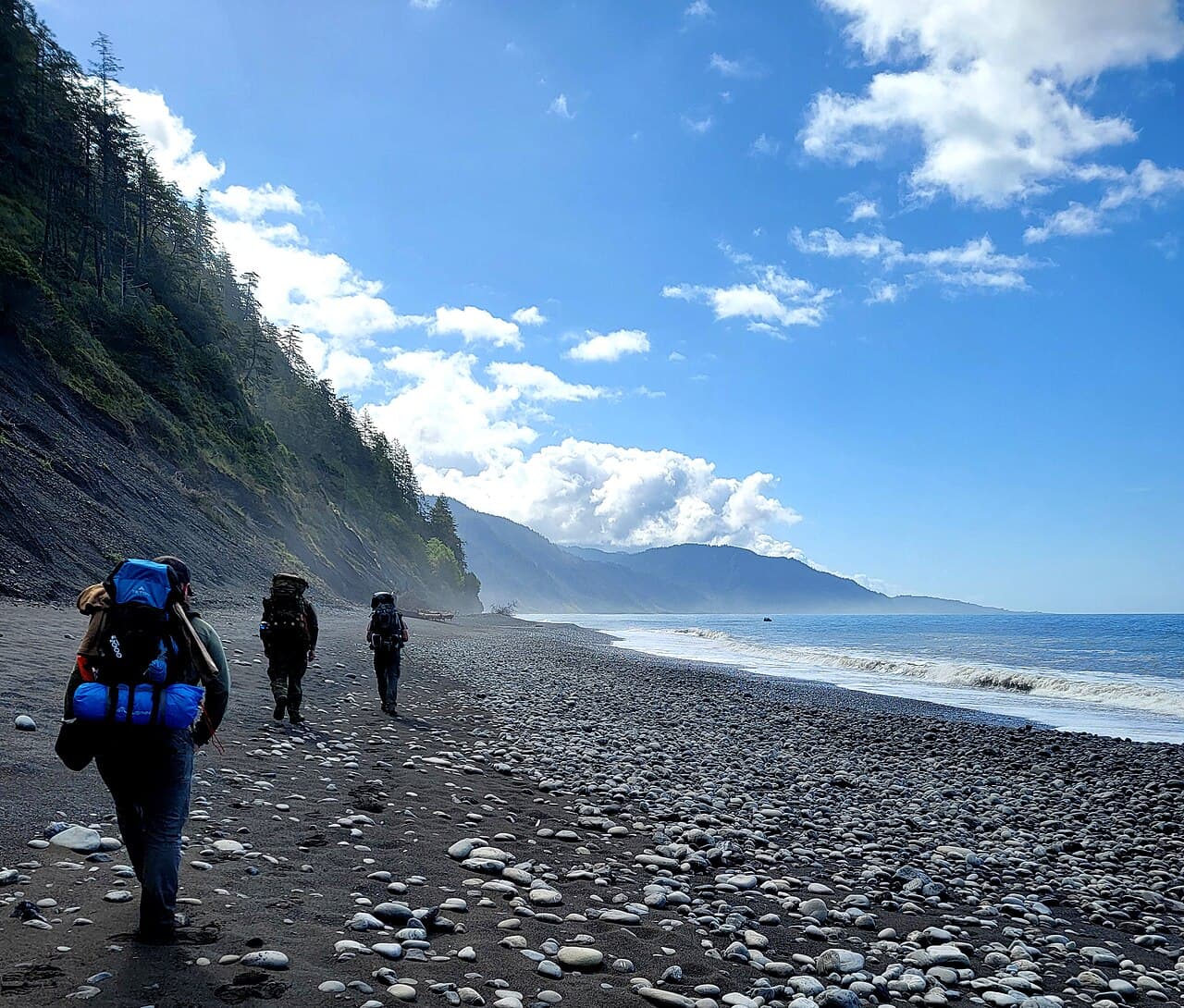
The Lost Coast Trail traverses 25 miles of California's most rugged and remote coastline within the King Range National Conservation Area. It is famous for its 'impassable zones': sections that disappear under the ocean at high tide, requiring careful planning and tide chart navigation.
Unlike traditional mountain trails, most of the Lost Coast is walked on sand, cobblestones, and slippery boulders, making progress slower than typical hiking. Most parties take 3-4 days to complete the traverse.
The route
From Mattole Beach, the trail follows grassy coastal bluffs before dropping to sand. The decommissioned Punta Gorda Lighthouse appears at mile 2.4, your first navigation checkpoint and a reminder of how treacherous this coast once was for ships.
Between Sea Lion Gulch and Randall Creek, the first major impassable zone demands respect. You'll watch the tide charts, time your crossing, and scramble over bowling-ball cobbles that exhaust your ankles. Spanish Flat offers respite, and rumors of buried treasure.
The middle section passes Miller Flat's hidden surf breaks and the longest impassable stretch (5 miles). Finally, Black Sands Beach appears: dark volcanic sand marking Shelter Cove and the end of California's wildest walk.
Why it matters
The 'Lost Coast' earned its name because Highway 1 was forced inland here: the King Range rises so steeply from the ocean that building a coastal road proved impossible. This 60-mile stretch remains the longest undeveloped coastline in California, a rare place where black bears roam the beaches and elephant seals haul out on the sand.
The feeling
The Lost Coast strips hiking down to its essence: you, the sea, and 25 miles of wild coastline. The rhythm is dictated not by mileage but by tides: consulting your tide chart becomes as instinctive as checking the trail. There's something primordial about navigating by sea level, watching the Pacific pulse against rocks that could trap you if you time it wrong. The reward is a coastline unchanged since the Sinkyone people walked it centuries ago.