Half Dome Day Hike Permit wilderness permit area in Yosemite National Park - backcountry hiking destination
LotteryDay UseVery High Demand

Half Dome Day Hike Permit

Yosemite National Park

Required permit to climb the famous cables on Half Dome. One of the most sought-after day hikes in America.

Stand atop one of America's most iconic granite monoliths, 4,800 feet above Yosemite Valley floor.

Get Availability Alerts

Be notified instantly when Half Dome permits become available.

Demand
Extremely High
10/10
Method
Lottery
Season
Late May - October
Cost
$10
Lottery Odds
~25%
Daily Quota
275 permits
Lottery Opens
March 1

Half Dome Quick Facts

Permit RequiredYes
Booking MethodLottery
Demand LevelExtremely High10/10
SeasonLate May - October
Cost$10
Daily Quota275 permits
Lottery Odds~25%
Max Group Size6 people

Key Information

Key Dates

Lottery OpensMarch 1
Lottery ClosesMarch 31
ResultsMid-April
SeasonLate May - October

Permit Details

TypeDay Use
Booking MethodLottery
Demand Level10/10
LocationCA

Pro Tips

  • Apply for weekdays in March lottery
  • Try daily lottery 2 days before
  • Start at 5am or earlier
  • Bring gloves and 4+ liters of water
  • Check weather for thunderstorms

What to Expect

Route Details

Distance
14.2 miles
Elevation Gain
4,800 ft
Route Type
Out & Back
Duration
10-14 hours
Difficulty
Strenuous
Elevation Range
4,035 - 8,846 ft

Highlights

  • A 10-14 hour day hike covering 14-17 miles depending on route choice
  • Nearly 5,000 feet of elevation gain with significant exposure on Sub Dome and cables
  • The Mist Trail is steeper and wetter; the JMT is longer but more gradual
  • Steel cables for the final 400-foot ascent at a 45-degree angle
  • Crowded conditions on summer weekends—expect to wait at the cables

Best Time to Visit

Late June through early September offers the most reliable conditions. July and August have warm temperatures but also afternoon thunderstorm risk. September has fewer crowds and stable weather but shorter days.

Hazards & Considerations

  • !Lightning strikes—do not attempt if thunderstorms are in the forecast
  • !Slick granite when wet—cables become extremely dangerous
  • !Severe exposure on cables—not recommended for those with fear of heights
  • !Dehydration and heat exhaustion in summer
  • !Hypothermia if caught in rain unprepared

How to Get This Permit

1

Create a Recreation.gov account

Sign up at recreation.gov if you don't have an account. Verify your email and add payment info ahead of time.

2

Apply during the lottery window

Submit your application between March 1 and March 31. Apply for multiple dates to increase your odds.

3

Wait for lottery results

Results are typically announced Mid-April. Check your email and recreation.gov account.

4

If unsuccessful, monitor cancellations

Permits get cancelled daily. Peak cancellation times are 24-48 hours before the trip date.

5

Set up PermitSnag alerts

Get instant notifications when cancellations happen. We check availability every few minutes, 24/7.

When to Go

Peak: July-AugustShoulder: June and September

Conditions

Cables typically down. Waterfalls spectacular but snow may block upper trail.

Crowd Level

Moderate

Advantages

  • +Powerful waterfalls
  • +Fewer crowds on lower trail

Challenges

  • !Cables not installed
  • !Snow on upper trail
  • !Cold water crossings

Difficulty Assessment

Physical Demand5/5

Fitness and endurance required

Technical Skill3/5

Climbing, scrambling, or specialized skills

Exposure Risk4/5

Steep dropoffs and fall potential

Navigation1/5

Route finding and trail clarity

Commitment4/5

Difficulty of bailing out mid-route

Best For

Well-conditioned hikers comfortable with significant exposure and heights. Must be able to maintain grip strength for the 400-foot cable ascent.

Recommended Experience

Should have completed at least one 10+ mile, 3,000+ ft elevation gain hike. Prior cable or scrambling experience helpful but not required.

Not Recommended For

Those with fear of heights, limited upper body strength, or anyone who has not completed a strenuous 10+ mile hike before.

About This Permit

Half Dome is one of the most demanding day hikes in any National Park—a 14 to 17-mile round trip that climbs nearly 5,000 feet from the valley floor to the summit at 8,846 feet. The hike passes two of Yosemite's most spectacular waterfalls before ascending the granite shoulder of Half Dome itself.

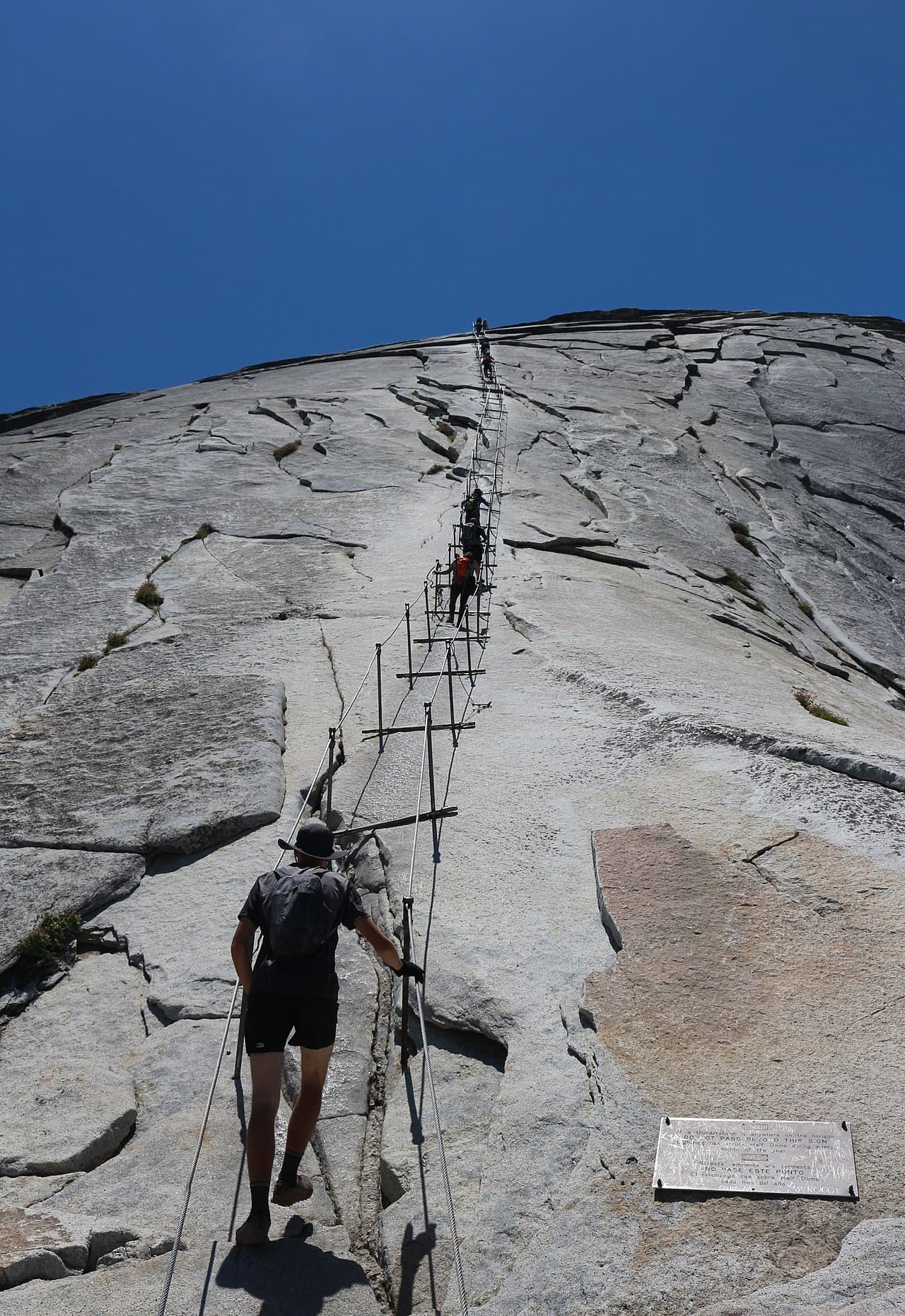
The final 400 feet are ascended using steel cables bolted into the rock, allowing hikers to climb what would otherwise require technical rock-climbing gear. This cable section is only accessible when the cables are 'up,' typically from late May through mid-October.

The Experience

Why It Matters

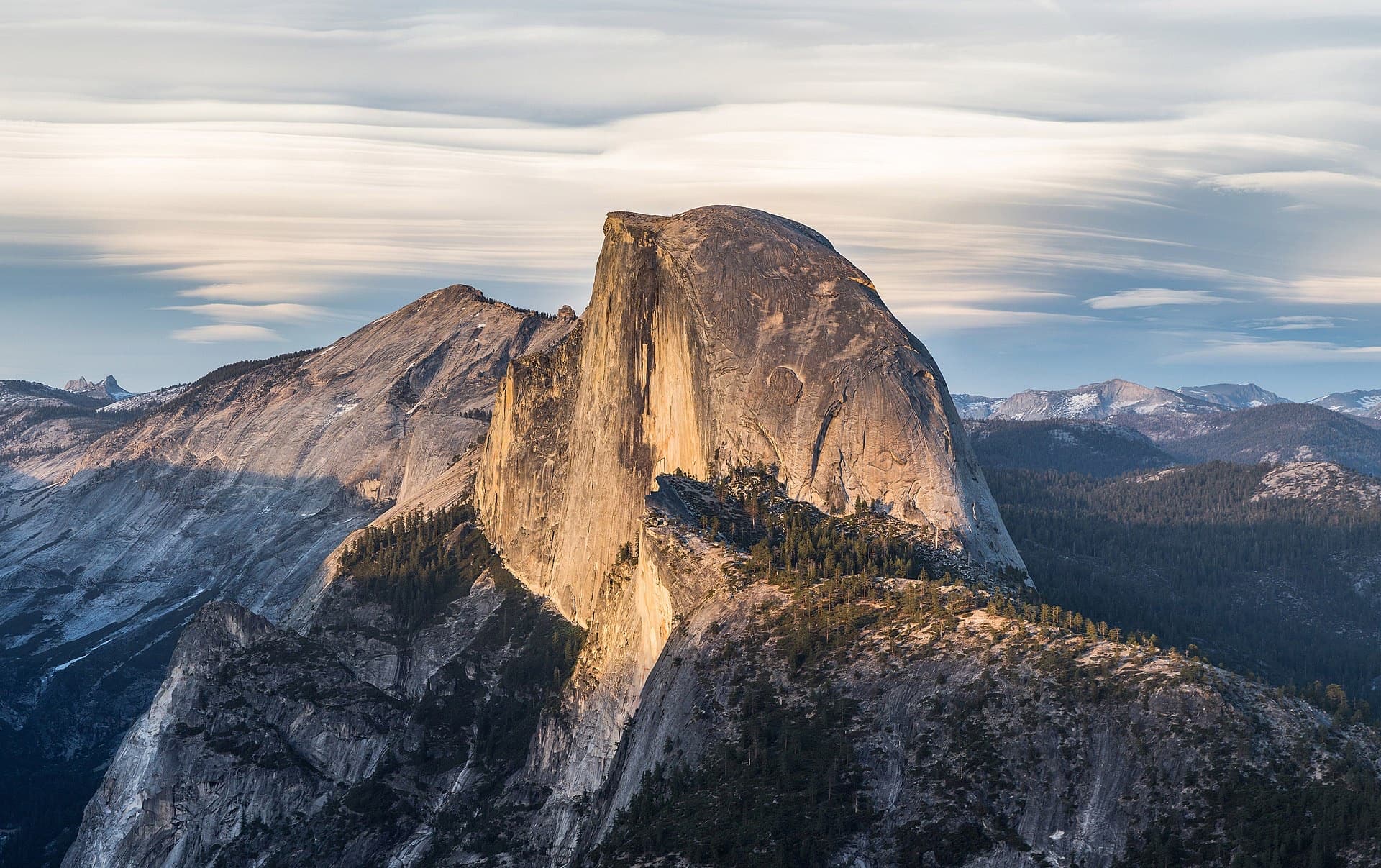
Half Dome has been a symbol of Yosemite since the park's founding. Its distinctive shape—carved by glaciers over millions of years—has inspired artists, photographers, and adventurers for over 150 years. For many, summiting Half Dome represents a personal milestone and a connection to the wilderness vision of John Muir.

The Route

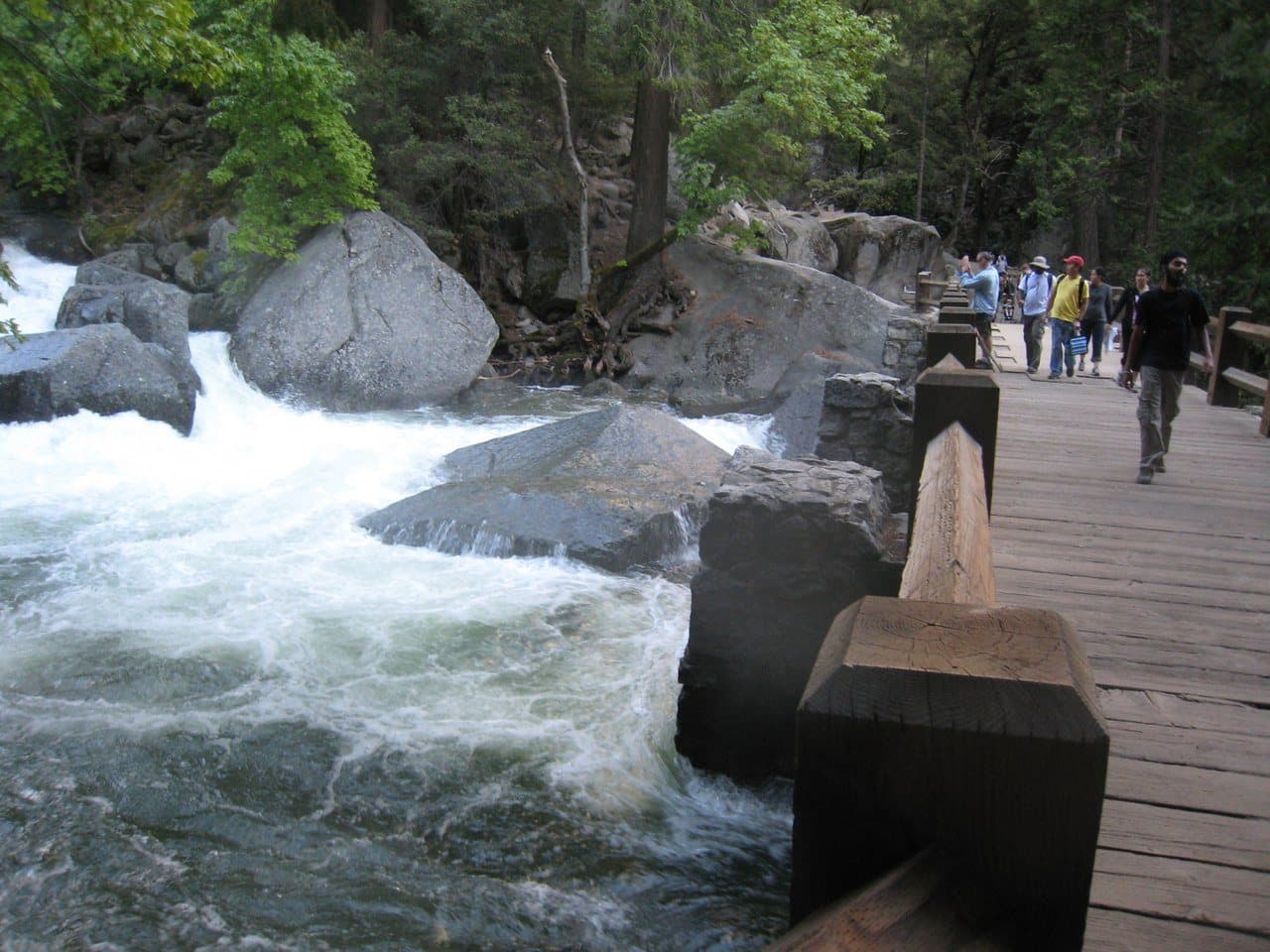
From Happy Isles, the trail splits into two paths that reunite above Nevada Fall. The Mist Trail is shorter but brutal—600 granite stairs rising through the spray of Vernal Fall, each step more slippery than the last. The John Muir Trail switchbacks more gently, offering views of Liberty Cap's granite dome.

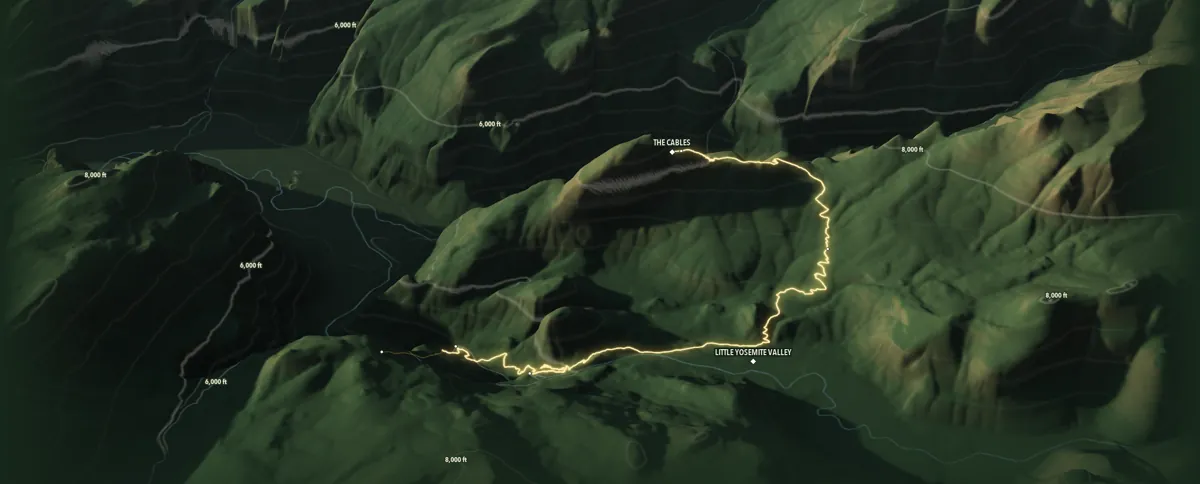
Above Nevada Fall, the forest closes in as you traverse Little Yosemite Valley. The crowds thin as you climb through silent pine forests toward the shoulder of Half Dome. Then the trees fall away, and you see it: the Sub Dome rising like a wall, and beyond it, the cables ascending into the sky.

The Sub Dome's steep switchbacks are merely a prelude. The cables themselves stretch 400 feet up polished granite at a 45-degree pitch. You grip cold steel, plant your feet on wooden planks, and pull. Pause. Breathe. Pull again. And then, suddenly, you're standing on top of the world.

The Feeling

The final ascent up the cables is unlike anything else in hiking. Your arms burn as you pull yourself up the 45-degree granite face, pausing at each wooden plank to catch your breath and steady your nerves. The exposure is intense—a sheer drop on either side with nothing but your grip and the steel cables between you and a very long fall. But when you crest the summit and step onto that broad granite dome, the entire Sierra stretches before you in an infinite sea of peaks and valleys.
Trailhead Information

Happy Isles Trailhead

4,035 ft elevation
Primary

The primary and most popular starting point for Half Dome, located at the eastern end of Yosemite Valley at Shuttle Stop #16.

Restrooms
Water Available
Weak Signal

Parking

No direct parking at trailhead. Use the Half Dome Village day-hiker lot (0.5 miles) or Curry Village (0.75 miles). Lots fill by 7am on summer weekends.

Getting There

Take the free Yosemite Valley shuttle to Stop #16. Shuttles run every 12-22 minutes from 7am to 10pm.

Nearest Services

Half Dome Village (Curry Village) has a general store, showers, and dining 0.75 miles from the trailhead.

Rules & Regulations

  • Valid Half Dome permit required to hike beyond Sub Dome when cables are up
  • Permits checked by rangers at the base of Sub Dome
  • Hiking without a permit is a federal violation (fine up to $5,000 and/or 6 months jail)
  • Group size limited to 6 people per permit
  • Camping prohibited at the summit or on Sub Dome
  • Dogs, bikes, and drones are prohibited on the trail

Gear Checklist

Required

  • Sturdy hiking boots with excellent traction
  • Headlamp with extra batteries (most hikes start pre-dawn)
  • At least 4 liters of water per person
  • Grippy work gloves for the cables (essential)

Recommended

  • Trekking poles (helpful for steep descent)
  • Via ferrata harness and lanyard (optional for nervous hikers)
  • Lightweight rain jacket (afternoon thunderstorms common)
  • Sunscreen, hat, and sunglasses
  • High-calorie snacks and lunch
  • Water filter (can refill at Merced River in Little Yosemite Valley)

Key Landmarks

4,800ft
Gain
4,800ft
Loss
⛰️
8,846ft
High
📏
8.2mi
Distance
📐
11%
Avg Grade
Click on a marker to view details8 landmarks

Landmarks (8)

Lottery Statistics

~25%

estimated success rate

Get detailed lottery statistics and tips in the PermitSnag app.

Want to see your odds?Get the app →

Safety & Planning

🚨

Emergency Info

Download the PermitSnag app for offline access to emergency contacts, ranger station locations, and satellite communicator tips for Half Dome.

Want to access emergency info offline?Get the app →
🐻

Food Storage

Check bear canister requirements, approved container lists, and rental locations in the PermitSnag app.

Want to check food storage requirements?Get the app →

Half Dome FAQ

How do I get a Half Dome permit?

Half Dome permits are obtained through a lottery system. The lottery typically opens March 1. Use PermitSnag to track availability and get notified when cancellations occur.

When is the best time to visit Half Dome?

The season typically runs Late May to October. Weekdays generally have better availability than weekends.

How competitive is the Half Dome permit?

This permit has a demand score of 10/10, making it extremely competitive. We recommend having backup dates and using PermitSnag's cancellation alerts.

What if I can't get a Half Dome permit?

Cancellations happen daily. Set up alerts with PermitSnag to get notified the moment a spot opens up. We check availability every few minutes, 24/7.

Photography Guide

Golden Hour

Sunset from Glacier Point offers the most iconic Half Dome photography, with alpenglow turning the granite face pink, orange, and red.

Best Light

Midday light on the summit provides even illumination for the 360-degree panorama. For the classic Ansel Adams view, shoot from Valley View at sunrise with Merced River reflections.

Beat the Crowds

For summit photography, arrive by first light (5am start) or stay until the last shuttle—midday crowds thin significantly after 2pm on the summit.

Classic Shots

  • 📍Glacier Point sunset view with alpenglow on the dome face
  • 📍Reflection in the Merced River from Sentinel Bridge at sunset
  • 📍The cables ascent from Sub Dome (wide angle)
  • 📍Panoramic summit view toward Clouds Rest and Tenaya Canyon
  • 📍Nevada Fall with Half Dome in background from John Muir Trail

Can't Get a Half Dome Permit?

Consider these alternatives if your preferred dates aren't available.

Clouds Rest

Similar Experience

A 14.5-mile hike with a knife-edge summit ridge that offers views looking DOWN on Half Dome from 1,000 feet above. Many argue the views are superior to Half Dome itself.

No permit needed

Tradeoffs

No cables or permit hassle, but requires Tioga Road access (seasonal). Less crowded but equally strenuous.

North Dome

Same Area

A 10-mile hike offering face-to-face views of Half Dome from directly across the valley. Includes optional side trip to Indian Rock natural arch.

No permit needed

Tradeoffs

Much less crowded and no permit needed, but you're looking at Half Dome rather than standing on it.

Four-Mile to Panorama Trail Loop

Easier Alternative

A 13-16 mile valley-rim loop passing Glacier Point and three major waterfalls (Illilouette, Nevada, and Vernal Falls).

No permit needed

Tradeoffs

No permit required and spectacular waterfall views, but no summit experience.