About this permit
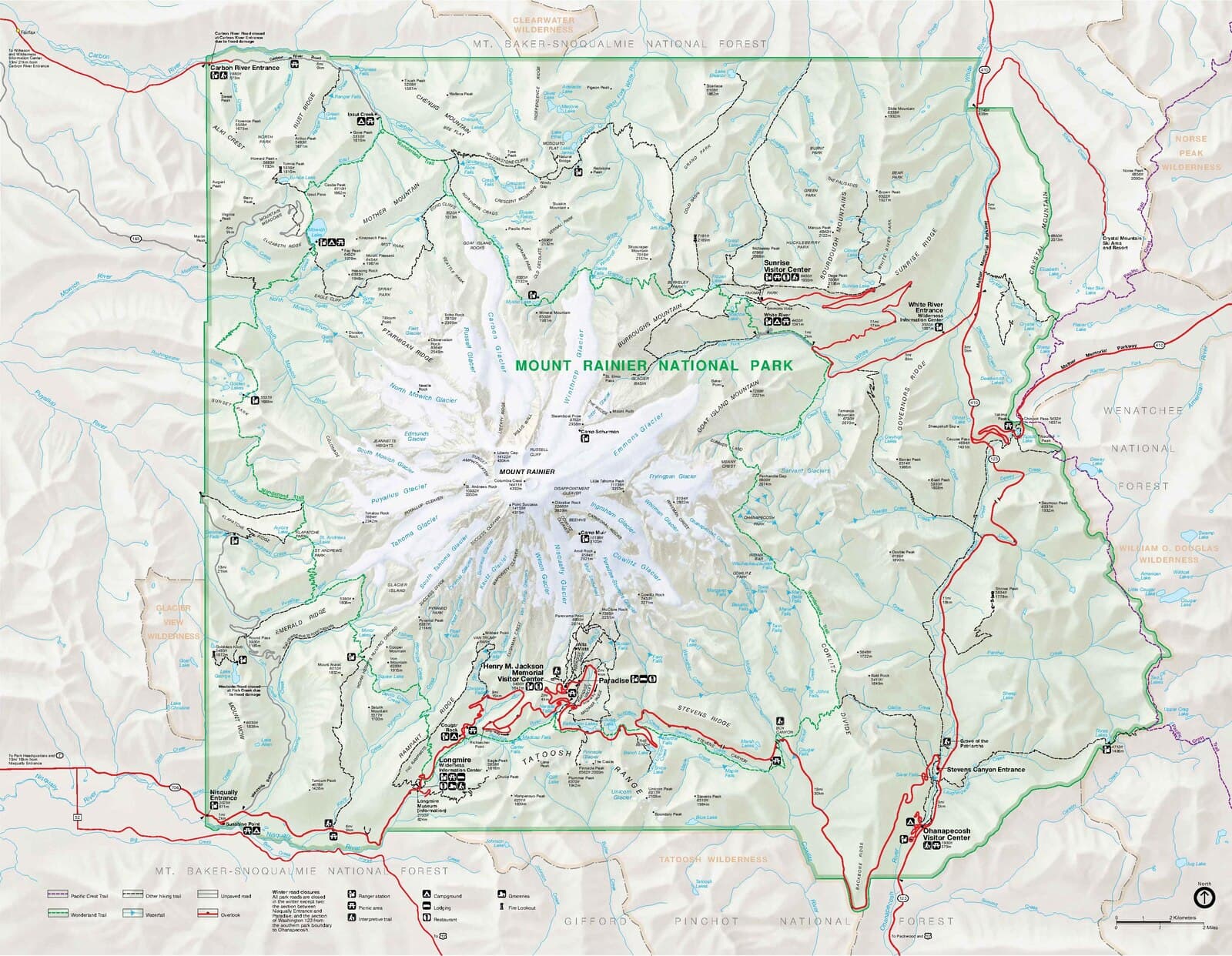
Mount Rainier is a 14,410-foot active volcano and the most heavily glaciated peak in the contiguous United States. NPS says reaching the summit by any route takes a vertical gain of more than 9,000 feet over ten or more miles, and that technical glacier-travel rope skills are required. There are over twenty climbing routes reached from four main trailheads (Paradise, Westside Road, White River and Mowich Lake), though SR165 to Carbon River and Mowich Lake is currently closed with no alternate route.
The permitting is layered, and which layers apply depends on when you go. Federal regulation requires a permit to be on a glacier or above roughly 10,000 feet, requires climbers to be 18 or have a guardian's permission, and prohibits soloing without specific authorization. From September 15 to May 21 you self-register: pay $82 per person at Pay.gov before you arrive, then fill out a card at the kiosk at the Paradise Old Station, and in winter that card also serves as your wilderness permit. From May 22 to September 30 there is no self-registration. You register in person at a wilderness information station, and the park holds roughly half of capacity at each camp and zone for walk-ups available 24 hours before the climb.
On top of climbing registration, the high-use season from May 1 to September 15 requires a wilderness permit at $12 per person per night, even if you are not camping and are climbing in a single push, because the park manages use along the whole route. Roughly two thirds of summer permits are reservable in advance on Recreation.gov and the remaining third are walk-up. An optional early-access lottery exists because demand for the Wonderland Trail and high-use climbing routes exceeds capacity: in 2026 it opened February 10, closed March 3, notified applicants March 14, and gave winners staggered booking windows from March 21 before general on-sale on April 25.
NPS last reported a summit figure in 2018: 5,135 successful out of 10,762 climbers, or 47.7%.