About this permit
Mount Whitney (14,505 ft) is the highest summit in the contiguous United States and the most coveted peak in American hiking. The main Whitney Trail is a non-technical Class 1 hike, but its 21.4-mile round trip with 6,656 feet of elevation gain makes it one of the most strenuous day hikes in North America.
Most successful summit attempts require starting between 2-5am to reach the summit by midday and descend before afternoon thunderstorms. The trail passes through the Whitney Zone, requiring a permit year-round.
The route
The Whitney Trail begins at Whitney Portal (8,360 ft), climbing through a Jeffrey pine forest along the North Fork of Lone Pine Creek. At mile 2.8, you pass Lone Pine Lake, the boundary of the Whitney Zone, where your permit becomes mandatory.
The trail steepens through Bighorn Park to Outpost Camp at mile 3.5, a sheltered area popular with backpackers. Beyond, you traverse past the forbidden-to-camp Mirror Lake and climb to Trail Camp (12,039 ft), the last water source and highest legal campsite.
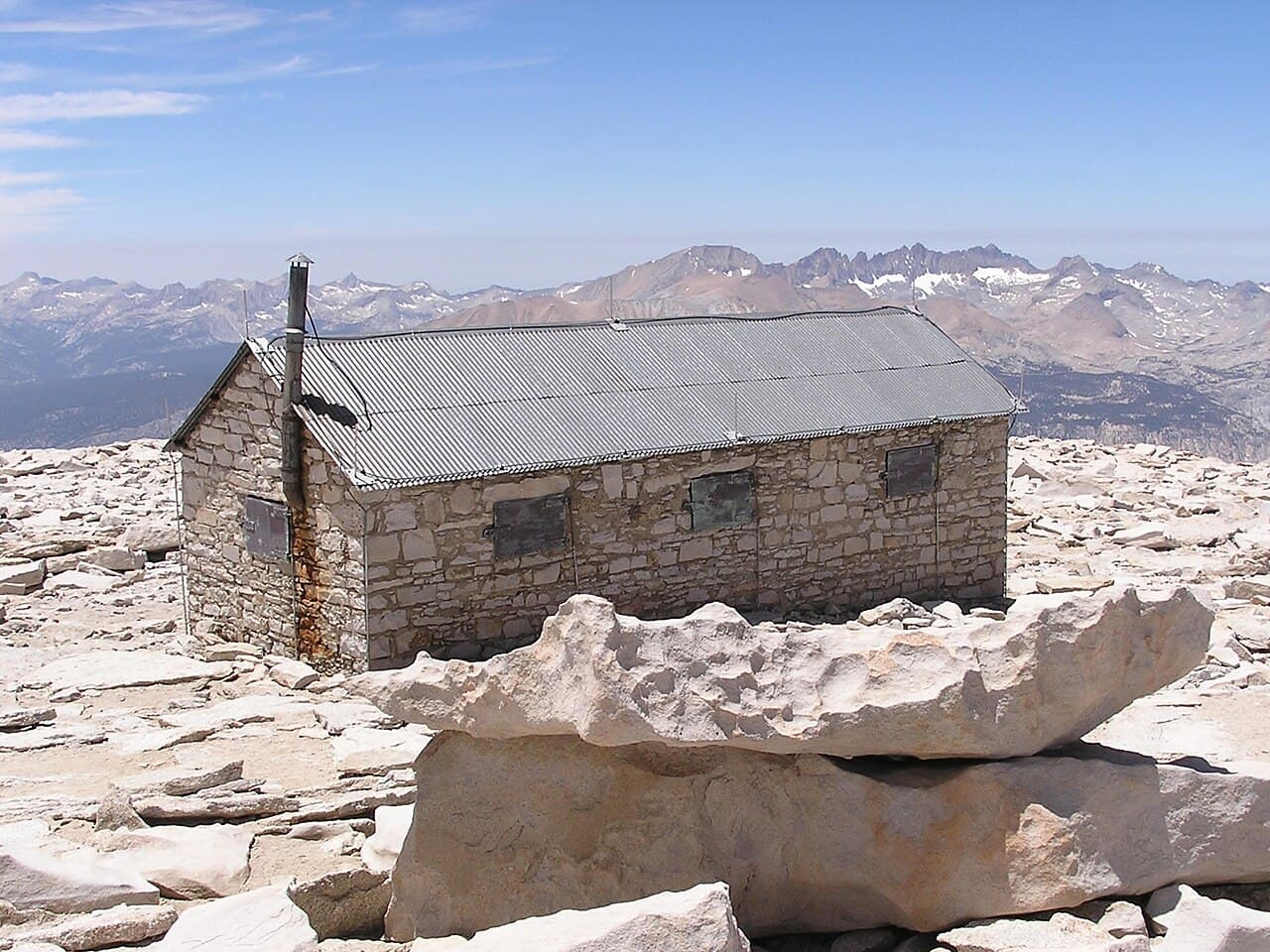
From Trail Camp, the trail attacks the headwall via the legendary 99 Switchbacks: steep, rocky zigzags that climb 1,600 feet to Trail Crest (13,645 ft), where you suddenly see the Western Sierra. The final 2 miles traverse an exposed granite ridge, passing gaps in the rock called 'The Windows' that offer vertigo-inducing views straight down. The stone summit hut appears, and then you're standing on top of the Lower 48.
Why it matters
Mount Whitney has been drawing mountaineers since Clarence King first attempted to climb it in 1871 (though he accidentally summited a nearby peak). The mountain was named for Josiah Whitney, head of the California Geological Survey. Today, it remains the most coveted summit in the Lower 48, a pilgrimage for peak baggers and a testament to human endurance.
The feeling
The pre-dawn start from Whitney Portal is disorienting: headlamps bobbing in the darkness, the trail a faint ribbon through black forest. As light seeps into the sky, you're already above timberline, trudging across granite moonscape. The infamous 99 Switchbacks seem to go on forever, but then you crest Trail Crest and see the Western Sierra spread below you like a rumpled blanket of stone and snow. The final ridge walk to the summit is surreal: you're higher than anything else for a hundred miles, the air thin and sharp, the Owens Valley impossibly far below.